Introduction
At first glance, comparing the OPPO Find X8 Pro and the Redmi Pad Pro might seem unusual — one is a flagship smartphone, and the other is a mid-range Android tablet. But these two devices actually come up together often in real buying decisions, especially for people trying to decide between “one premium do-everything phone” versus “a capable phone-tablet combo on a budget.” This guide breaks down how each device performs across design, display, power, cameras, battery, and value, so you can decide which setup actually fits your life and budget.
OPPO Find X8 Pro vs Redmi Pad Pro: Quick Comparison
| Spec | OPPO Find X8 Pro | Redmi Pad Pro |
|---|---|---|
| Category | Flagship smartphone | Mid-range tablet |
| Display | 6.78″ LTPO AMOLED, 120Hz, 2K | 12.1″ IPS LCD, 120Hz, 2.5K |
| Chipset | MediaTek Dimensity 9400 (3nm) | Snapdragon 7s Gen 2 (4nm) |
| RAM | 12GB / 16GB LPDDR5X | 6GB / 8GB |
| Storage | 256GB / 512GB / 1TB UFS 4.0 | 128GB / 256GB, expandable |
| Rear Cameras | Quad 50MP (Hasselblad-tuned, dual periscope) | Single 8MP |
| Battery | 5910mAh, 80W wired / 50W wireless | 10,000mAh, 33W wired |
| OS | Android 15, ColorOS 15 | Android 14, HyperOS |
| Build | Glass & aluminum, IP68/IP69 | Metal body, no official IP rating |
| Best for | Photography, flagship performance, all-round phone use | Media consumption, note-taking, casual multitasking |
Design and Build Quality
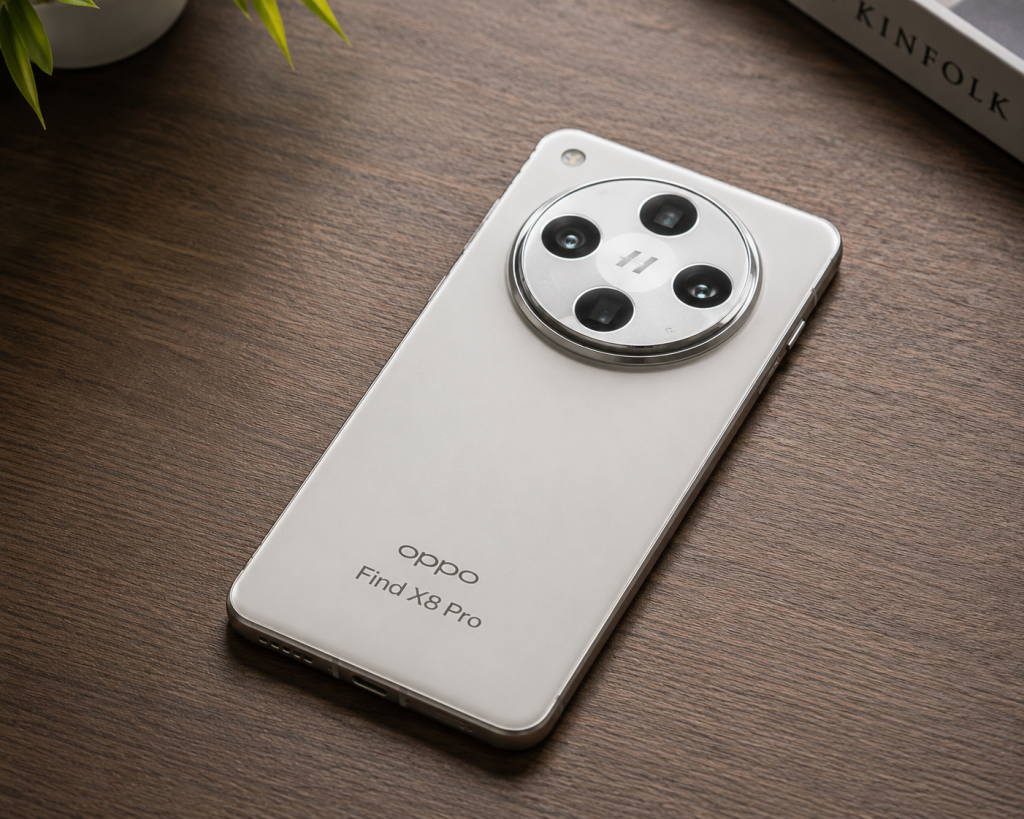
The Find X8 Pro feels like a proper flagship in the hand — a glass-and-aluminum sandwich with curved “Infinite View Display” edges, an alert slider for quick sound-mode switching, and IP68/IP69 certification, meaning it can survive submersion and even high-pressure hot water jets. It weighs around 215g and comes in Black, White, and Blue finishes.
The Redmi Pad Pro takes a completely different approach, as expected for a large-screen tablet. It has a metal unibody that feels sturdy for the price bracket, but it doesn’t carry an official dust/water resistance rating in most markets. Its size is built around comfortable two-handed use for video, reading, and note-taking rather than pocketability.
If premium materials and rugged durability matter to you, the Find X8 Pro wins outright. If you want a large, light slate you can prop up on a desk or hold like a book, the Redmi Pad Pro’s tablet form factor is simply a different (and valid) design goal.
Display Comparison
The Find X8 Pro sports a 6.78-inch LTPO AMOLED panel with a roughly 1264 x 2780 resolution, 120Hz refresh rate, Dolby Vision and HDR10+ support, and a claimed peak brightness of up to 4500 nits — genuinely excellent for outdoor visibility and HDR content. Corning Gorilla Glass Victus 2 (or Gorilla Glass 7i on some listings) protects it.
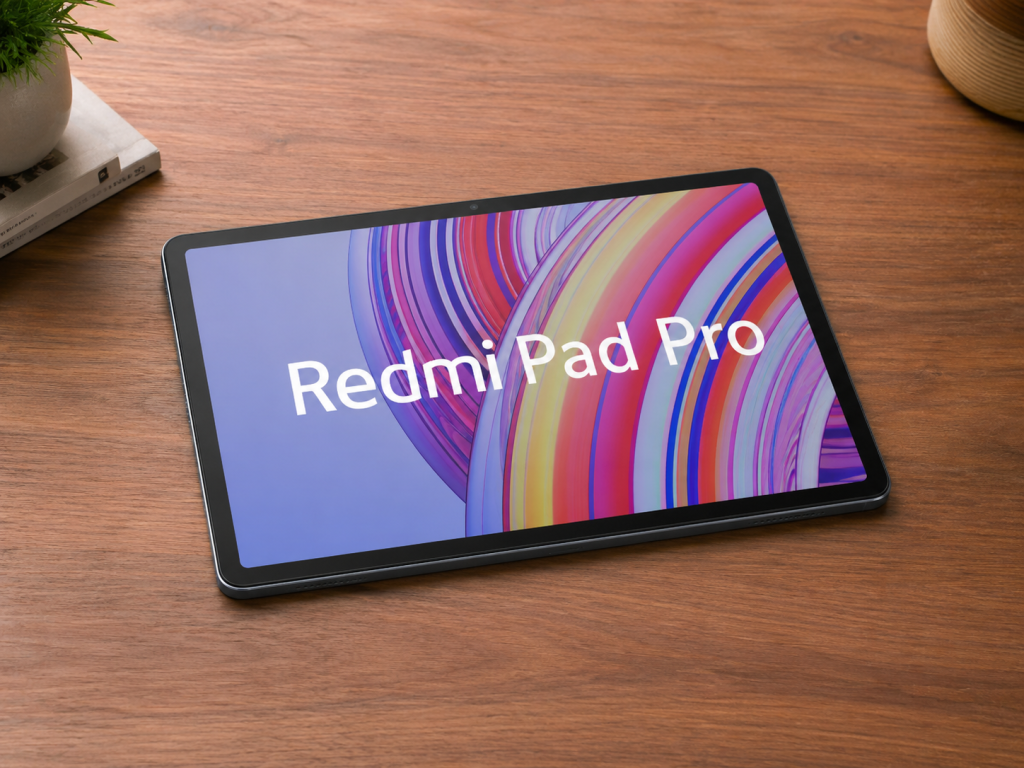
The Redmi Pad Pro has a much larger 12.1-inch IPS LCD panel at 2560 x 1600 resolution (249 ppi), also with a 120Hz adaptive refresh rate, Dolby Vision support, and up to 600 nits peak brightness. It uses Corning Gorilla Glass 3.
AMOLED vs LCD is the deciding factor here: the OPPO’s screen delivers deeper blacks, better contrast, and much higher peak brightness, while the Redmi’s LCD panel prioritizes sheer screen real estate for reading, streaming, and split-screen multitasking.
Performance and Processor
The Find X8 Pro runs on the MediaTek Dimensity 9400, a 3nm flagship chipset paired with OPPO’s Trinity Engine for thermal and performance optimization. This is genuinely top-tier silicon capable of handling any app, heavy multitasking, and demanding games at high settings.
The Redmi Pad Pro uses the Snapdragon 7s Gen 2, a 4nm mid-range chipset with an Adreno 710 GPU. It comfortably handles everyday tasks, media apps, and light-to-moderate gaming, but it’s not built to compete with flagship-tier silicon.
For raw horsepower, the Find X8 Pro is in a completely different league — which makes sense given the price and category gap between the two devices.
RAM and Storage Options
- OPPO Find X8 Pro: 12GB or 16GB LPDDR5X RAM, with storage options up to 256GB, 512GB, or 1TB of UFS 4.0 storage. No microSD expansion.
- Redmi Pad Pro: 6GB or 8GB RAM, with 128GB or 256GB storage, expandable via a dedicated microSDXC slot.
The Find X8 Pro offers faster RAM and storage standards suited to flagship multitasking, while the Redmi Pad Pro’s expandable storage is a practical win for anyone who wants to keep offline movies, books, or large files without paying for higher storage tiers upfront.
Camera Features
This is where the two devices diverge the most. The Find X8 Pro features a Hasselblad-co-engineered HyperTone Quad Camera system:
- 50MP main wide (f/1.6, OIS)
- 50MP ultra-wide (f/2.0)
- 50MP periscope telephoto (3x, OIS)
- 50MP ultra-periscope telephoto (6x, OIS)
- 32MP front camera
This setup is built for serious mobile photography, with strong zoom versatility and computational features like AI Telescope Zoom and AI Photo Remaster.
The Redmi Pad Pro, like most tablets, treats cameras as a secondary feature: an 8MP rear camera and an 8MP front camera, both capped at 1080p video. It’s fine for video calls and document scanning, but it’s not meant for serious photography.
Battery Life and Charging
- Find X8 Pro: 5910mAh silicon-carbon battery with 80W wired SUPERVOOC charging and 50W AirVOOC wireless charging — fast top-ups despite the smaller capacity.
- Redmi Pad Pro: 10,000mAh battery with 33W wired charging — no wireless charging, but the sheer capacity gives it excellent multi-day standby and long video playback runtime.
Charging speed favors OPPO; raw endurance for media binging favors the Redmi Pad Pro, since tablets naturally sip power more efficiently per screen-on hour relative to their battery size.
Software and User Experience
The Find X8 Pro ships with ColorOS 15 on Android 15, offering deep customization, AI-powered features, and OPPO’s typical long-term update commitment for flagship devices.
The Redmi Pad Pro runs Xiaomi’s HyperOS on Android 14, with tablet-optimized multitasking features, an interconnectivity suite that syncs with other Xiaomi/Redmi devices, and support for the optional Redmi Smart Pen and keyboard accessories for productivity use.
Both interfaces are polished, but they’re built for different use cases: ColorOS is tuned around single-handed phone use, while HyperOS on the Pad Pro leans into split-screen, stylus, and keyboard-driven productivity.
Connectivity and Extra Features
The Find X8 Pro includes Wi-Fi 7, full 5G band support, NFC, and an under-display fingerprint sensor, along with extras like a dedicated Quick Button for camera launch and magnetic accessory support for charging cases.
The Redmi Pad Pro offers Wi-Fi support with an optional 5G variant, and its “extra features” are centered on accessories: a Redmi Smart Pen for note-taking and sketching, and a companion keyboard case for turning it into a lightweight productivity device.
Audio and Multimedia Experience
Both devices are strong for media consumption in their own right. The Find X8 Pro has stereo speakers tuned for clear, immersive sound alongside its Dolby Vision display. The Redmi Pad Pro goes further on the audio front with quad speakers and Dolby Atmos support, which — combined with its larger, Dolby Vision-certified screen — makes it a genuinely strong choice for movies, YouTube, and gaming sessions where screen size matters more than pixel density.
Gaming Performance
The Dimensity 9400 in the Find X8 Pro is a clear step above the Snapdragon 7s Gen 2 in raw graphics and sustained performance, backed by a vapor chamber cooling system and haptic feedback tuned for gaming. It will comfortably run the most demanding mobile titles at high settings with better frame stability.
The Redmi Pad Pro’s Snapdragon 7s Gen 2 and Adreno 710 GPU handle popular titles well at medium-to-high settings, and the large screen adds genuine immersion for gaming, but it isn’t designed for competitive, high-refresh, ultra-settings gaming the way the Find X8 Pro is.
Price and Value for Money
The Find X8 Pro sits firmly in flagship smartphone pricing territory, generally in the $1,000+ range depending on region and configuration — reflecting its camera system, chipset, and build quality.
The Redmi Pad Pro is positioned as a mid-range tablet, typically priced at a fraction of the Find X8 Pro’s cost, making it an accessible option for anyone who wants a large screen for media and productivity without flagship-phone spending.
Pros and Cons
OPPO Find X8 Pro
Pros:
- Flagship-level Dimensity 9400 performance
- Exceptional Hasselblad-tuned quad-camera system with dual periscope zoom
- Bright, high-contrast LTPO AMOLED display
- Fast wired and wireless charging
- IP68/IP69 durability
Cons:
- Premium price point
- No microSD expansion
- Smaller screen, not ideal for heavy media/reading sessions
Redmi Pad Pro
Pros:
- Large, immersive 12.1-inch display with 120Hz refresh
- Huge 10,000mAh battery for long media/gaming sessions
- Quad speakers with Dolby Atmos
- Expandable storage
- Budget-friendly pricing
- Stylus and keyboard accessory support
Cons:
- Mid-range Snapdragon 7s Gen 2 chipset, not flagship-tier
- Basic 8MP cameras
- LCD panel, not as vivid as AMOLED
- No wireless charging, slower wired charging
Who Should Buy OPPO Find X8 Pro?
Choose the Find X8 Pro if you want a single, do-everything flagship phone — someone who values top-tier photography, wants the fastest chipset available, cares about build quality and water resistance, and is willing to pay a premium for a pocketable device that replaces the need for a separate camera.
Who Should Buy Redmi Pad Pro?
Choose the Redmi Pad Pro if you’re looking for a large-screen companion device for streaming, reading, note-taking, or casual gaming — ideal for students, media consumers, or anyone who wants a second screen at home without spending flagship-phone money. It also makes sense as a productivity tablet when paired with the optional stylus and keyboard.
Frequently Asked Questions (FAQs)
Can the Redmi Pad Pro replace a smartphone? No — it has no cellular calling in most configurations (aside from the optional 5G data variant) and its cameras are basic. It’s designed to complement a phone, not replace one.
Is the OPPO Find X8 Pro worth it just for the camera? If mobile photography and zoom versatility are priorities, yes — its Hasselblad-tuned quad-camera system with dual periscope lenses is one of the strongest camera setups available on a phone.
Which has better battery life? The Redmi Pad Pro’s 10,000mAh battery lasts longer in absolute screen-on time for media consumption, but the Find X8 Pro charges much faster thanks to 80W wired and 50W wireless charging.
Does the Redmi Pad Pro support a stylus? Yes, it supports the optional Redmi Smart Pen, along with a companion keyboard case for productivity tasks.
Is the Find X8 Pro waterproof? It carries an IP68/IP69 rating, meaning it can handle submersion and even high-pressure water jets — a rare feature at this level for a smartphone.
Final Verdict
These two devices aren’t really direct rivals — they’re built for different jobs. The OPPO Find X8 Pro is a top-tier flagship phone for people who want the best possible camera, performance, and build quality in their pocket. The Redmi Pad Pro is a value-focused, large-screen tablet for media, reading, and light productivity.
If you need one primary device that does everything, including calls and photography, the Find X8 Pro is the clear pick. If you want an affordable, big-screen companion for entertainment and note-taking alongside your existing phone, the Redmi Pad Pro delivers excellent value. Your choice really comes down to which category of device you’re actually shopping for.