Introduction
Eight years separate the iPhone 6s Plus and the Google Pixel 8 Pro, and it shows in almost every category. The iPhone 6s Plus launched in September 2015 as Apple’s biggest, most powerful phone of its era, introducing 3D Touch and a much-improved 12MP camera. The Pixel 8 Pro arrived in October 2023 as Google’s computational-photography and AI flagship, built around the custom Tensor G3 chip. This isn’t really a “which one should I buy” comparison in the traditional sense — it’s more a look at how far smartphones have come, and a useful reference if you’re weighing a nostalgic old iPhone against a genuinely modern flagship.
iPhone 6s Plus vs Google Pixel 8 Pro: Quick Comparison
| iPhone 6s Plus | Google Pixel 8 Pro | |
|---|---|---|
| Released | September 2015 | October 2023 |
| Display | 5.5″ 1080p LCD | 6.7″ 120Hz LTPO OLED |
| Chip | Apple A9 | Google Tensor G3 |
| RAM | 2GB | 12GB |
| Rear cameras | 12MP single | 50MP + 48MP + 48MP triple |
| Battery | 2,750mAh | 5,050mAh |
| OS support | iOS 9, capped at iOS 15 | Android 14, 7 years of updates |
| Water resistance | None (unofficial) | IP68 |
| Charging | 5W wired, no wireless | 30W wired, 23W wireless |
Key Specifications at a Glance
The iPhone 6s Plus runs on a dual-core Apple A9 chip with 2GB of RAM, a 5.5-inch 1920×1080 LCD, a single 12MP rear camera, and a 2,750mAh battery, all wrapped in an aluminum-and-glass body that predates any official water resistance rating. The Pixel 8 Pro runs Google’s 9-core Tensor G3 chip with 12GB of RAM, a 6.7-inch 120Hz LTPO OLED at 1344×2992, a triple 50MP/48MP/48MP camera system, and a 5,050mAh battery, in an IP68-rated Gorilla Glass Victus 2 body. On paper, the Pixel 8 Pro out-specs the 6s Plus in essentially every measurable way — which is expected of a phone built eight generations later.
Design and Build Quality
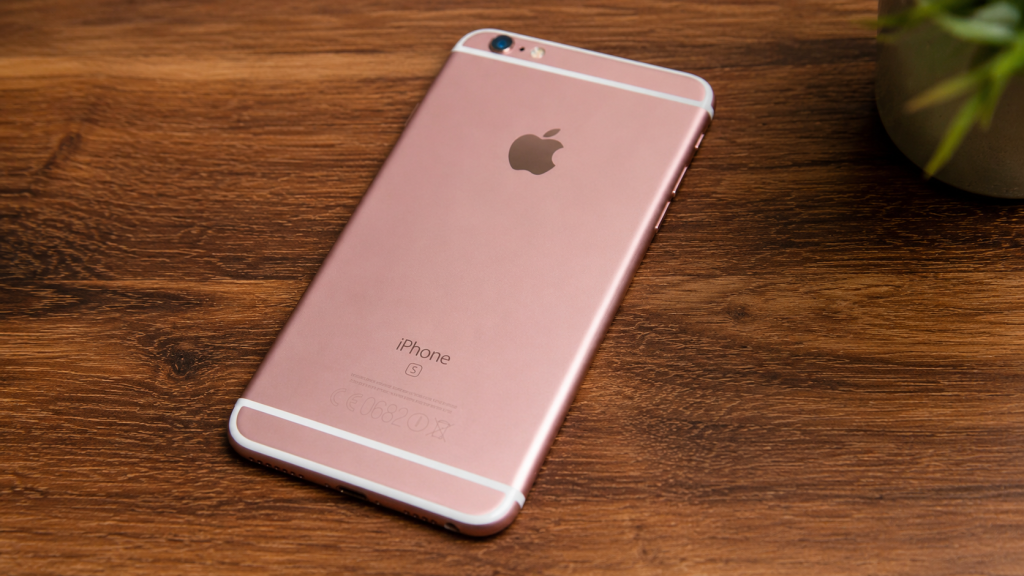
The iPhone 6s Plus set the design language Apple would use for years: rounded aluminum edges, a glass front, and antenna bands running across the back. At 192g and 7.3mm thick, it was considered large for its time, though it’s slim by today’s standards. It has no official IP rating, so it isn’t designed to survive submersion or heavy rain exposure.
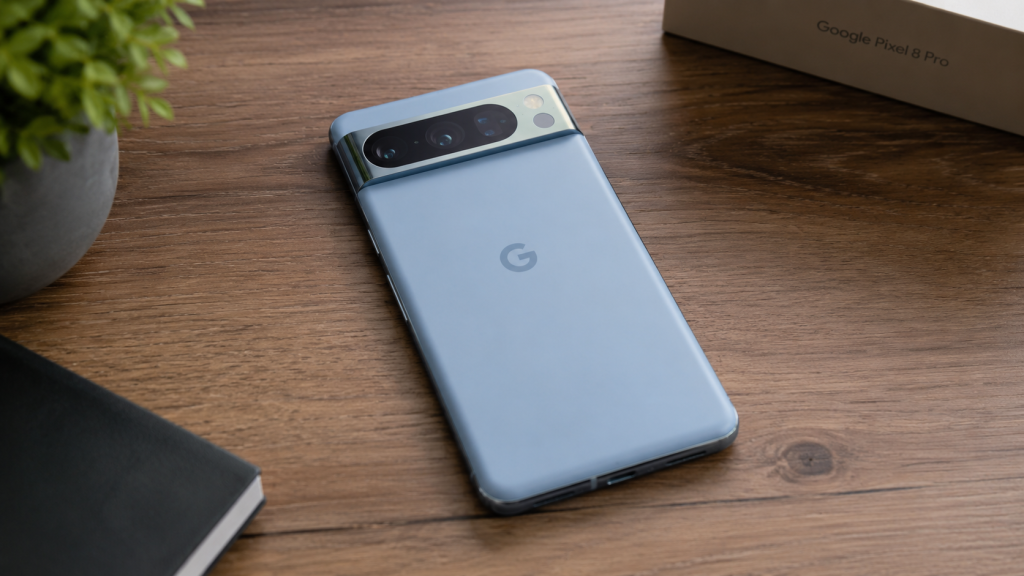
The Pixel 8 Pro is heavier at 213g and thicker at 8.8mm, with a glass sandwich design — Gorilla Glass Victus 2 on both the front and back — wrapped in a polished aluminum frame. Its flat camera bar is a Pixel design signature, and it carries an IP68 rating, meaning it’s built to handle dust and submersion. Build quality on both phones is considered premium for their generation, but the Pixel 8 Pro’s glass back and IP68 rating give it a clear durability edge.
Display Comparison
The 6s Plus uses a 5.5-inch IPS LCD at 1920×1080 (401 ppi), with a standard 60Hz refresh rate and 3D Touch, a pressure-sensitive feature Apple later discontinued. It’s a good LCD for its era but lacks the deep blacks, HDR support, or high refresh rate expected of a modern display.
The Pixel 8 Pro’s 6.7-inch LTPO OLED panel runs at 1344×2992 (489 ppi) with a variable refresh rate up to 120Hz, HDR10+ support, and peak brightness around 2,400 nits. The difference in sharpness, contrast, color accuracy, and outdoor visibility is enormous — this is one of the widest gaps in the entire comparison.
Performance and Processor
The Apple A9 was a genuinely fast chip in 2015, but by modern standards it’s dramatically outpaced. With a dual-core CPU at roughly 1.84GHz and 2GB of RAM, the 6s Plus struggles with today’s apps, heavy multitasking, and current iOS versions (it maxes out at iOS 15).
The Tensor G3 in the Pixel 8 Pro is a 9-core, 4nm chip built with Google’s AI and machine-learning workloads specifically in mind, paired with 12GB of RAM. It’s not the fastest raw silicon compared to Apple’s or Qualcomm’s newest chips, but it comfortably handles modern multitasking, AI features, and years of software updates without strain.
RAM and Storage Options
The iPhone 6s Plus shipped with 2GB of RAM and 16GB, 64GB, or 128GB of non-expandable storage — 16GB in particular feels extremely cramped today. The Pixel 8 Pro ships with 12GB of RAM across all models, with storage options of 128GB, 256GB, 512GB, or 1TB, also non-expandable. The Pixel’s storage and memory headroom are in an entirely different league.
Camera Performance
The 6s Plus has a single 12MP rear camera with an f/2.2 aperture, optical image stabilization, and a five-element lens — solid for 2015, capable of good daylight photos but limited in low light, dynamic range, and zoom versatility.
The Pixel 8 Pro’s triple-camera system pairs a 50MP main sensor (f/1.68, OIS) with a 48MP ultrawide and a 48MP 5x telephoto capable of up to 30x Super Res Zoom. Combined with Google’s computational photography — Night Sight, Magic Eraser, Best Take, and Photo Unblur — it produces dramatically better results in virtually every lighting condition.
Video Recording Capabilities
The 6s Plus records 4K video at 30fps, 1080p at 30/60fps, and slow-motion at up to 240fps in 720p, with OIS for video stabilization. It was an impressive video spec for its time.
The Pixel 8 Pro records 4K at up to 60fps with more advanced stabilization, Night Sight video, and Google’s Video Boost feature, which processes footage in the cloud for improved HDR and low-light quality. The Pixel’s video output is sharper, more stable, and better in mixed lighting.
Battery Life and Charging
The 6s Plus has a modest 2,750mAh battery, generally good for a day of light-to-moderate use when new, though age has likely degraded most surviving units. Charging tops out around 5W with no wireless charging support.
The Pixel 8 Pro’s 5,050mAh battery is nearly double the capacity, supporting 30W wired charging and 23W wireless charging. Real-world battery life on the Pixel 8 Pro is noticeably longer, and it charges far faster.
Software and Operating System
The 6s Plus originally shipped with iOS 9 and was officially supported through iOS 15, after which Apple ended new OS updates for the device — meaning newer apps and features are no longer guaranteed to run well or at all.
The Pixel 8 Pro launched with Android 14 and Google has committed to seven years of OS, security, and Feature Drop updates, extending its usable software lifespan well into the early 2030s. This is currently the longest update commitment of any Android phone.
Security Features (Touch ID vs Face Unlock)
The 6s Plus uses Touch ID, a capacitive fingerprint sensor in the home button — fast, reliable, and still considered secure, though it requires physically touching the button.
The Pixel 8 Pro offers both an under-display fingerprint sensor and face unlock, backed by Google’s Titan M2 security chip. It’s a more flexible, class 3 (BSI)-certified biometric setup, though face unlock alone isn’t approved for payment authentication on the Pixel.
AI Features and Smart Tools
The 6s Plus predates on-device AI features entirely; Siri exists but runs cloud-dependent voice commands without today’s generative capabilities.
The Pixel 8 Pro is built around AI: Tensor G3 powers on-device features like Call Screen, Live Translate, Magic Eraser, Best Take, Audio Magic Eraser, and Recorder transcription, with Google progressively adding more Gemini-powered features through software updates. This is one of the Pixel 8 Pro’s defining selling points.
Gaming Performance
The A9’s dual-core CPU and older GPU handle 2015-era games fine but can’t run most current, graphically demanding titles smoothly, and many newer games no longer support iOS 15.
The Tensor G3’s GPU handles modern mobile games well at high settings, aided by the 120Hz display for smoother visuals, though it isn’t the top gaming chip in its own generation (Snapdragon-based flagships from the same era generally edge it out in raw gaming benchmarks).
Everyday User Experience
Day-to-day, the 6s Plus feels its age: slower app loading, a lower-resolution display, no modern app compatibility guarantees, and a battery that has likely degraded after years of use. The Pixel 8 Pro feels fluid and current — fast app switching, a bright high-refresh display, and long-term software support that keeps the experience feeling fresh for years.
Audio Quality and Speakers
The 6s Plus has a single down-firing speaker plus the earpiece for stereo-like effect, and includes a 3.5mm headphone jack. The Pixel 8 Pro has proper stereo speakers (bottom-firing plus earpiece) that sound noticeably fuller and louder, but drops the headphone jack entirely, requiring USB-C or wireless audio.
Connectivity (5G, Wi-Fi, Bluetooth, NFC)
The 6s Plus supports 4G LTE, Wi-Fi 802.11ac, Bluetooth 4.2, and NFC (used only for Apple Pay, not general NFC access). It has no 5G support.
The Pixel 8 Pro supports 5G, Wi-Fi 7, Bluetooth 5.3, and open NFC for Google Wallet and other uses. It’s built for current and near-future network standards; the 6s Plus is not.
Durability and Water Resistance
The 6s Plus has no official IP rating — Apple didn’t add certified water resistance until the iPhone 7. The Pixel 8 Pro carries an IP68 rating, tested for dust ingress and freshwater submersion up to a specified depth and time. For anyone concerned about spills, rain, or accidental drops in water, the Pixel 8 Pro is far better protected.
Which Phone Takes Better Photos?
The Pixel 8 Pro, decisively. Its larger, newer sensors, computational photography pipeline, and versatile triple-camera setup outperform the 6s Plus’s single 12MP camera in nearly every scenario — especially low light, zoom, and dynamic range.
Which Phone Is Better for Gaming?
The Pixel 8 Pro, thanks to its far more capable GPU, 120Hz display, and continued app/game compatibility. The 6s Plus can no longer run many current mobile games at all.
Which Phone Is Better for Photography?
Again, the Pixel 8 Pro. Beyond raw hardware, Google’s computational photography features (Night Sight, Magic Eraser, Best Take) give it tools the 6s Plus never had access to, even at launch.
Which Phone Is Better for Students?
The Pixel 8 Pro is the more practical daily-use choice — longer software support, better multitasking, and a battery that lasts through a full day of classes. The only scenario favoring the 6s Plus is an extremely tight budget where a very cheap secondhand unit is the only option, with the understanding that app compatibility will be limited.
Which Phone Is Better for Business Users?
The Pixel 8 Pro, without much debate — modern security (Titan M2), longer OS support for enterprise compliance, better multitasking RAM, and current connectivity standards (5G, Wi-Fi 7) matter more for professional use than nostalgia or cost savings.
Pros and Cons of iPhone 6s Plus
Pros:
- Compact by today’s “large phone” standards, with a solid aluminum-and-glass build
- Touch ID is fast and reliable
- Headphone jack included
- Very affordable on the secondhand market
Cons:
- Capped at iOS 15; many current apps may not install or run well
- Small, low-resolution display by modern standards
- Single camera with dated low-light performance
- No 5G, no wireless charging, no official water resistance
- Battery capacity and likely degradation after years of use
Pros and Cons of Google Pixel 8 Pro
Pros:
- Excellent, versatile triple-camera system
- Bright, sharp 120Hz OLED display
- Seven years of promised software and security updates
- IP68 water/dust resistance, 5G, Wi-Fi 7
- Strong AI-powered features (Call Screen, Magic Eraser, Live Translate)
Cons:
- No headphone jack
- Heavier and thicker than the 6s Plus
- Gaming performance trails some Snapdragon-based rivals from its own generation
- Significantly more expensive, even on the secondhand market
Who Should Buy the iPhone 6s Plus?
Realistically, only someone who needs an extremely cheap, basic backup phone, a device for a child with limited needs, a testing/development unit for older iOS versions, or a collector interested in Apple’s design history. It is not a sensible primary phone in 2026 given its software ceiling and camera limitations.
Who Should Buy the Google Pixel 8 Pro?
Anyone shopping for a modern flagship who wants a great camera, a bright high-refresh display, strong AI features, and years of guaranteed software support — students, professionals, photography enthusiasts, and general daily users alike. It represents mainstream 2023-era flagship performance that still holds up well.
Price and Value for Money
The iPhone 6s Plus, being over a decade old, is now typically found only on the secondhand or refurbished market at low prices, reflecting its outdated software and hardware ceiling. The Pixel 8 Pro launched at a premium flagship price point and, while it has since been succeeded by newer Pixel models, it remains available at a reduced price on the used and refurbished market while still offering current-generation performance and years of remaining update support — making it the far better value per dollar for anyone using the phone as a daily driver today.
Frequently Asked Questions (FAQs)
Can the iPhone 6s Plus still be updated? No. Apple’s final software update for the 6s Plus was iOS 15; it cannot be upgraded further, which limits compatibility with newer apps.
Does the Pixel 8 Pro have a headphone jack? No, it relies on USB-C or wireless audio.
Is the Pixel 8 Pro waterproof? It’s IP68 rated, meaning it resists dust and can survive submersion in fresh water under specific conditions — not the same as fully waterproof for all use cases.
Is the iPhone 6s Plus worth buying in 2026? Only as a very cheap backup or secondary device; its software limitations and dated camera make it a poor primary phone choice today.
Which phone has a better camera? The Pixel 8 Pro, by a wide margin, thanks to its triple-camera system and computational photography features.
Final Verdict
This comparison isn’t close in practical terms — the Google Pixel 8 Pro outperforms the iPhone 6s Plus in display quality, camera capability, processing power, battery life, software longevity, and connectivity, which is expected given the eight-year gap between them. The iPhone 6s Plus remains a nostalgic, well-built phone for its time, but it’s best suited today as a budget backup device rather than a primary phone. For anyone choosing a phone to actually use daily in 2026, the Pixel 8 Pro is the clear, practical choice.