Introduction
Comparing the POCO X7 Pro against the iPhone XS Max feels a little like comparing two different eras of smartphones, because that’s exactly what it is. The POCO X7 Pro launched in January 2025 as a mid-range performance champion, while the iPhone XS Max arrived back in September 2018 as Apple’s flagship of that generation. Yet this comparison still matters: plenty of people are deciding between picking up a brand-new budget Android phone or a used/refurbished iPhone flagship that can be found cheaply today. This guide breaks down how these two very different phones stack up across design, performance, cameras, battery, and value.
POCO X7 Pro vs iPhone XS Max: Quick Comparison
| Spec | POCO X7 Pro | iPhone XS Max |
|---|---|---|
| Release Date | January 2025 | September 2018 |
| Display | 6.67″ AMOLED, 120Hz, 1220×2712 | 6.5″ OLED, 60Hz, 2688×1242 |
| Chipset | MediaTek Dimensity 8400 Ultra | Apple A12 Bionic |
| RAM | 8GB / 12GB | 4GB |
| Storage | 128GB / 256GB / 512GB | 64GB / 256GB / 512GB |
| Rear Camera | 50MP main + 8MP ultra-wide | Dual 12MP (wide + telephoto) |
| Battery | 6000mAh (6550mAh in India) | 3174mAh |
| Charging | 90W wired | 18W wired, 7.5W Qi wireless |
| OS | Android 15 (HyperOS 2) | Up to iOS 18 (no iOS 26) |
| Build | IP68, Gorilla Glass Victus 2 | IP68, glass front and back |
Design and Build Quality
The POCO X7 Pro uses a modern design language with a textured “vegan leather” back on some color variants, flat sides, and a slim 8.3mm profile despite its large 6000mAh+ battery. At 195g, it’s noticeably lighter than you’d expect for its size, and it comes with an IP68 rating (IP69 in some regions), putting it ahead of most phones in its price class for durability.
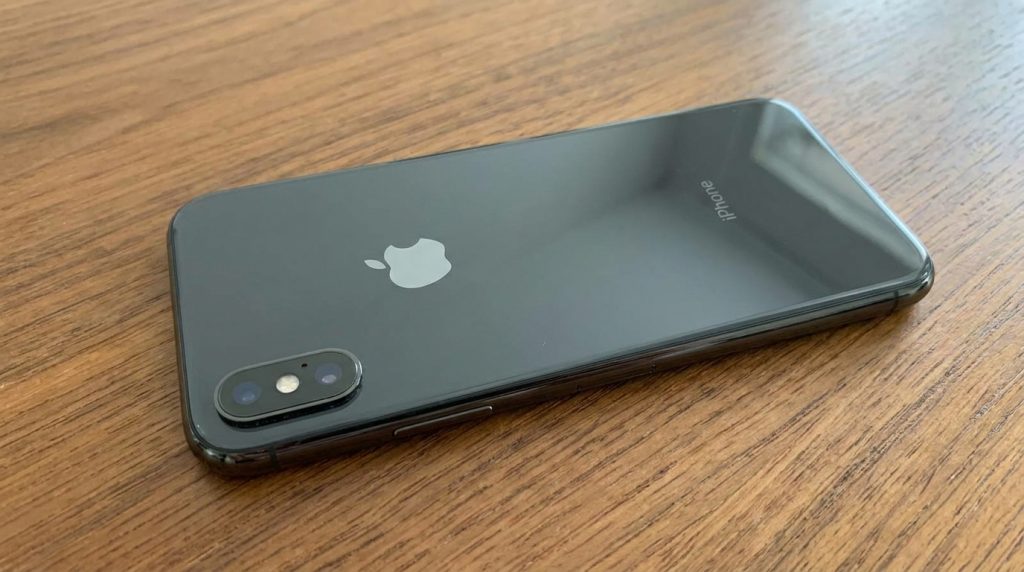
The iPhone XS Max, by contrast, represents Apple’s glass-sandwich design from 2018: a stainless steel frame with glass front and back, supporting wireless charging. It’s a touch heavier at 208g and thicker at 7.7mm. It also carries an IP68 rating, which was genuinely impressive for its era. Build quality-wise, the iPhone still feels premium today, but its glass back is more fragile in drops compared to the POCO’s mixed plastic/leather construction.
Display Comparison
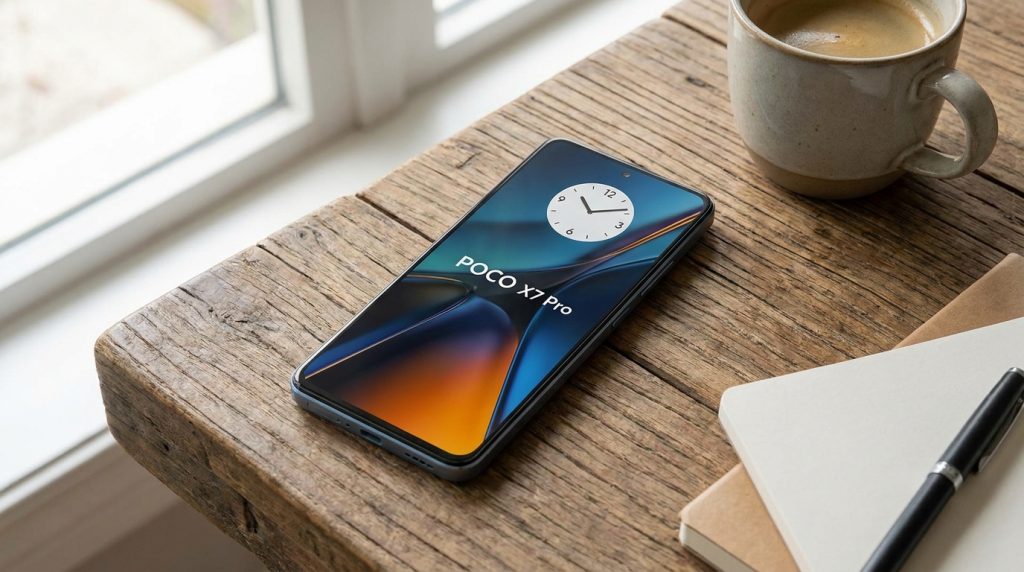
This category isn’t close on paper. The <cite index=”2-1,2-3″>POCO X7 Pro uses a 6.67″ AMOLED display with 1220p resolution, 12-bit color depth, 120Hz refresh rate, and Dolby Vision support</cite>, plus <cite index=”2-3″>HDR10+, 1400 nits typical brightness, and up to 3200 nits peak brightness</cite>.
The iPhone XS Max’s 6.5-inch Super Retina OLED display runs at a fixed 60Hz refresh rate with a 2688 x 1242 resolution. It still looks sharp and has excellent color accuracy for its time, but the lack of a high refresh rate is very noticeable in 2026, especially for scrolling and gaming smoothness. The POCO’s 120Hz panel is the clear winner for everyday visual fluidity, while the iPhone still holds its own in color accuracy and peak sharpness (458ppi vs 446ppi).
Performance and Processor
The POCO X7 Pro is powered by the <cite index=”2-3″>MediaTek Dimensity 8400 Ultra chip with an All-Big-Core processor design and improved graphics</cite>, paired with up to 12GB of RAM. This is a genuinely modern, efficient chipset built for 2025-2026 workloads, and benchmark testing shows it handling heavy multitasking with ease.
The iPhone XS Max’s A12 Bionic was groundbreaking for its time — the <cite index=”10-2″>first 7nm chip with a 6-core CPU (2 performance + 4 efficiency cores), 4-core GPU, and 8-core Neural Engine</cite>. It’s aged remarkably well thanks to Apple’s tight hardware-software integration, and it still runs iOS 18 smoothly. That said, raw benchmark numbers now favor the POCO X7 Pro significantly; a mid-range 2025 chip simply outguns a 2018 flagship chip in almost every synthetic and real-world test.
Gaming Performance
For gaming, the POCO X7 Pro has real advantages: a 120Hz AMOLED screen, a modern GPU inside the Dimensity 8400 Ultra, and good thermal management for sustained sessions. Reviewers note it delivers <cite index=”6-1″>stable frame rates and good thermal management, making long gaming sessions comfortable and lag-free</cite>.
The iPhone XS Max can still run most games from the App Store thanks to iOS’s tighter optimization, and its Neural Engine helps with AI-based game features. However, its 60Hz display caps visual smoothness, and newer, more demanding titles may not be fully supported since Apple’s software focus has moved to newer hardware. For gamers who care about frame rates and refresh rate, the POCO X7 Pro is the stronger pick.
Camera Comparison
The POCO X7 Pro’s rear setup uses a <cite index=”3-1″>50MP wide-angle primary camera with up to 10x digital zoom and an 8MP ultra-wide camera, supporting 4K video at 60fps</cite>. Reviewers have been mixed about the ultra-wide lens specifically, with one review noting the <cite index=”5-1″>Poco X7 Pro gets a lot right but makes a few fumbles, including a low-quality ultrawide camera</cite> compared to competitors.
The iPhone XS Max’s dual 12MP wide and telephoto system, with <cite index=”15-1″>ƒ/1.8 aperture wide-angle and ƒ/2.4 aperture telephoto lenses, 2x optical zoom, dual optical image stabilization, and Portrait mode with advanced bokeh</cite>, still produces very natural, well-balanced photos — a hallmark of Apple’s computational photography even in older models. It lacks a true night mode, since that <cite index=”10-4″>arrived exclusively with the iPhone 11</cite>, which is a real limitation in low light.
Overall: the POCO wins on raw resolution and versatility (wider zoom range, higher megapixel main sensor), while the iPhone still holds up well for color science and portrait shots, though it shows its age in low-light conditions.
Battery Life and Charging
This is where the generational gap is starkest. The <cite index=”2-1″>global POCO X7 Pro comes with a 6000mAh battery (6550mAh in the Indian version), with charging rated at up to 90W</cite>. In lab testing, it <cite index=”8-3″>charged to 49% in 15 minutes, 83% in 30 minutes, and reached 100% in 44 minutes</cite>. Real-world users report the phone <cite index=”7-1″>waltzing through a full day of intensive use and marching into a second day before needing a recharge</cite>.
The iPhone XS Max’s 3174mAh battery is far smaller, offering <cite index=”14-1″>up to 15 hours of video playback or up to 65 hours of audio playback</cite>, and supports <cite index=”14-1″>fast charging to 50% in 30 minutes with an 18W adapter</cite>, plus Qi wireless charging. While battery tech and iOS efficiency meant the XS Max was praised for battery life in 2018, it simply cannot compete with the POCO’s much larger cell and dramatically faster charging in 2026.
Software and User Experience
The POCO X7 Pro ships with <cite index=”7-4″>Android 15 with HyperOS on top, and Poco has promised three years of OS updates plus an extra year of security updates</cite>. A common criticism is that it arrives <cite index=”7-4″>chock-full of pre-installed third-party apps</cite>, requiring some cleanup out of the box.
The iPhone XS Max shipped with iOS 12 and has been supported all the way through <cite index=”10-3″>iOS 18, though it does not support iOS 26 due to hardware limitations</cite>. That’s an unusually long software support run — seven major iOS versions — which is one of Apple’s biggest strengths. However, since it’s now at the end of its update lifecycle, it won’t receive new iOS versions going forward, while the POCO X7 Pro has years of updates still ahead of it.
Storage and RAM Options
The POCO X7 Pro is available in configurations up to <cite index=”1-1″>512GB of storage and 12GB of RAM</cite>, with lower trims offering 8GB RAM and 128GB/256GB storage. None of its storage is expandable via microSD.
The iPhone XS Max came in <cite index=”14-2″>64GB, 256GB, and 512GB storage options</cite>, but with a fixed <cite index=”17-1″>4GB of RAM</cite> across every variant. iOS historically manages RAM more efficiently than Android, so this gap matters less in daily use than the number suggests — but for heavy multitasking or modern app demands, more RAM on the POCO gives it headroom the iPhone doesn’t have.
Connectivity and Extra Features
The POCO X7 Pro supports modern 5G, Wi-Fi 6, and Bluetooth, along with NFC for contactless payments. It’s built for current-day cellular networks and future-proofed connectivity standards.
The iPhone XS Max maxes out at <cite index=”17-1″>4G LTE with no 5G support</cite>, though it does have <cite index=”17-1″>Bluetooth 5.0, dual-band Wi-Fi 802.11ac, and NFC</cite>. For anyone on a 5G plan or living in an area with strong 5G coverage, the iPhone XS Max simply can’t keep up.
Audio and Speakers
The POCO X7 Pro features <cite index=”8-3″>stereo speakers with Dolby Atmos enhancement, scoring “Very Good” for loudness with rich highs, okay vocals, and some bass</cite> in lab testing.
The iPhone XS Max also has stereo speakers with support for Dolby Atmos playback and a wide range of audio format support. Both phones lack a 3.5mm headphone jack, so wired listening requires an adapter or dongle on either device.
Security Features
The POCO X7 Pro relies on an in-display or side-mounted fingerprint sensor (depending on the exact model/market) alongside standard Android face unlock, which is convenience-focused but less secure than Apple’s implementation.
The iPhone XS Max uses Face ID exclusively, powered by the TrueDepth camera array, and it’s still regarded as one of the more secure and reliable biometric systems for everyday phone unlocking, working effectively even in the dark.
Price and Value for Money
The POCO X7 Pro launched at aggressive pricing, with the <cite index=”6-2″>expected India price ranging between ₹19,999 and ₹25,999</cite> depending on RAM/storage, positioning it firmly as a value-for-money mid-ranger with flagship-adjacent specs.
The iPhone XS Max, being a discontinued 2018 flagship, is <cite index=”14-3″>no longer sold new by Apple as of October 2024</cite>, and can now be found on the used/refurbished market for a fraction of its original price — <cite index=”14-4″>starting around $144 on marketplaces like Swappa</cite>. If you’re comparing “new phone for the money” versus “old flagship for cheap,” the value proposition depends entirely on whether you prioritize raw modern specs or the Apple ecosystem at a steep discount.
Pros and Cons
POCO X7 Pro
Pros:
- Massive 6000mAh+ battery with 90W fast charging
- Smooth 120Hz AMOLED display
- Strong modern chipset for gaming and multitasking
- IP68 rating and durable build
- Much lower price when bought new
Cons:
- Ultra-wide camera quality is weak
- HyperOS ships with noticeable bloatware
- No wireless charging
iPhone XS Max
Pros:
- Excellent camera color science and Portrait mode
- Long software support history (up to iOS 18)
- Face ID remains fast and reliable
- Premium glass-and-steel design with wireless charging
Cons:
- No 5G support
- Small 3174mAh battery by today’s standards
- Fixed 60Hz display
- No longer receiving new iOS versions
- Only 4GB RAM
Who Should Buy the POCO X7 Pro?
The POCO X7 Pro makes sense for anyone who wants a genuinely modern phone on a budget: strong all-day battery life, fast charging, a fluid 120Hz display, and enough processing power for gaming and multitasking for years to come. It’s a good fit for Android users, gamers, and anyone prioritizing raw hardware value over brand ecosystem.
Who Should Buy the iPhone XS Max?
The iPhone XS Max is best suited to someone already invested in the Apple ecosystem who wants a cheap, secondhand entry point — perhaps as a backup phone, a first iPhone for a younger user, or someone who values iOS’s software polish and camera color science over having the latest specs. It’s not a good choice for anyone who wants 5G, a high refresh-rate screen, or long-term future software updates.
Frequently Asked Questions (FAQs)
Is the POCO X7 Pro better than the iPhone XS Max? For raw hardware specs, battery life, display smoothness, and gaming performance, yes — the POCO X7 Pro is a newer and more capable device overall. The iPhone XS Max still holds an edge in camera color accuracy and software polish for its era, but it’s outdated in most modern comparisons.
Does the iPhone XS Max support 5G? No, it only supports 4G LTE.
Can the iPhone XS Max still get software updates? It received updates through iOS 18 but <cite index=”10-3″>does not support iOS 26 due to hardware limitations</cite>, meaning it’s effectively at the end of its update life.
Which phone has better battery life? The POCO X7 Pro, by a wide margin, thanks to its much larger 6000mAh+ battery versus the iPhone XS Max’s 3174mAh cell.
Which phone is better for gaming? The POCO X7 Pro, due to its modern chipset, 120Hz display, and better thermal management for sustained sessions.
Final Verdict
Comparing the POCO X7 Pro to the iPhone XS Max is really a comparison between “best value mid-ranger of 2025” and “flagship of 2018 available cheap today.” If you’re shopping brand-new and want the most capable phone for your money, the POCO X7 Pro wins on nearly every technical front — battery, charging speed, display smoothness, gaming performance, and RAM. The iPhone XS Max’s advantages are narrower now: camera color science, Face ID reliability, and long-standing software support that has only recently run out. For most buyers in 2026, the POCO X7 Pro is the more sensible and future-proof choice, while the iPhone XS Max only makes sense as a steeply discounted secondhand pickup for Apple loyalists.