Overview
Comparing the Xiaomi 15 Ultra to the Xiaomi Pad 7 Pro feels a bit like comparing a sports car to a pickup truck — they’re both excellent at what they do, but they’re built for completely different jobs. The 15 Ultra is Xiaomi’s flagship camera-first smartphone, co-engineered with Leica and priced to compete with the Galaxy S25 Ultra and iPhone 16 Pro Max. The Pad 7 Pro is a mid-premium productivity tablet built around a huge 3.2K 144Hz screen, a stylus, and desktop-style multitasking.
They aren’t really rivals — most people end up considering both as complementary devices rather than either/or. But if your budget only stretches to one of them right now, this guide breaks down exactly where each one wins.
Key Differences at a Glance
- The 15 Ultra is a phone with cellular connectivity and a top-tier camera system; the Pad 7 Pro is a Wi-Fi-only tablet built for reading, note-taking, and media.
- The 15 Ultra uses a smaller but sharper AMOLED panel with far higher peak brightness; the Pad 7 Pro uses a larger LCD panel with a faster 144Hz refresh rate.
- The 15 Ultra runs the flagship Snapdragon 8 Elite; the Pad 7 Pro runs the upper-mid-range Snapdragon 8s Gen 3.
- The Pad 7 Pro’s 8,850mAh battery dwarfs the 15 Ultra’s 5,410mAh, but it’s spread across a much larger screen.
- The 15 Ultra costs roughly 60-70% more than the Pad 7 Pro at comparable storage tiers.
Specifications Comparison
| Spec | Xiaomi 15 Ultra | Xiaomi Pad 7 Pro |
|---|---|---|
| Release date | February 2025 | October 2024 |
| Display | 6.73″ LTPO AMOLED, WQHD+ (3200×1440) | 11.2″ IPS LCD, 3.2K (3200×2136) |
| Refresh rate | Up to 120Hz | Up to 144Hz |
| Peak brightness | 3,200 nits | 800 nits |
| Chipset | Snapdragon 8 Elite (3nm) | Snapdragon 8s Gen 3 (4nm) |
| RAM | 12GB / 16GB | 8GB / 12GB |
| Storage | 256GB / 512GB / 1TB | 128GB / 256GB / 512GB |
| Rear cameras | 50MP main (1″) + 50MP 3x + 200MP periscope + 50MP ultrawide | 50MP single camera |
| Front camera | 32MP | 32MP |
| Battery | 5,410mAh (global) | 8,850mAh |
| Charging | 90W wired / 80W wireless | 67W wired, no wireless |
| Build | Aluminum, ceramic/titanium back, Gorilla Glass Victus 2, IP68 | Aluminum unibody, glass front |
| Connectivity | 5G, Wi-Fi 7, Bluetooth | Wi-Fi 7 only, no cellular |
| OS | HyperOS 3 (Android 15 base) | HyperOS 2 (Android 15 base) |
| Weight | 226-229g | ~500g |
| Starting price | ~$910 (16GB/512GB) | ~$400-550 depending on region/config |
Design and Build Quality
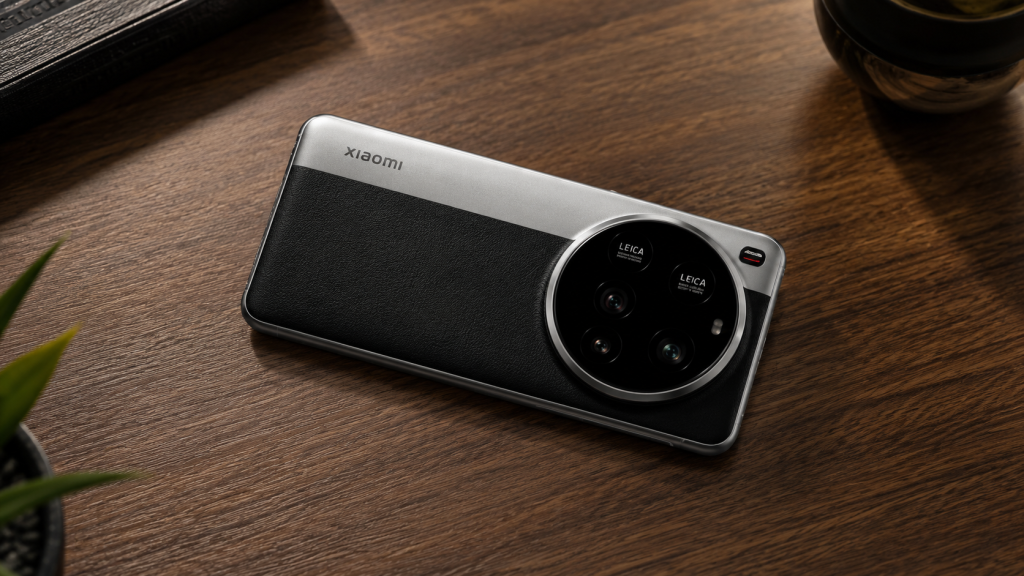
The 15 Ultra is a dense, premium slab designed to be held in one hand: aluminum frame, a ceramic or titanium-effect back depending on colorway, Xiaomi Shield Glass 2.0 up front, and a genuinely large circular camera module that dominates the back. It’s IP68 rated for dust and water resistance, which matters a lot for a device you’re carrying around outdoors every day.
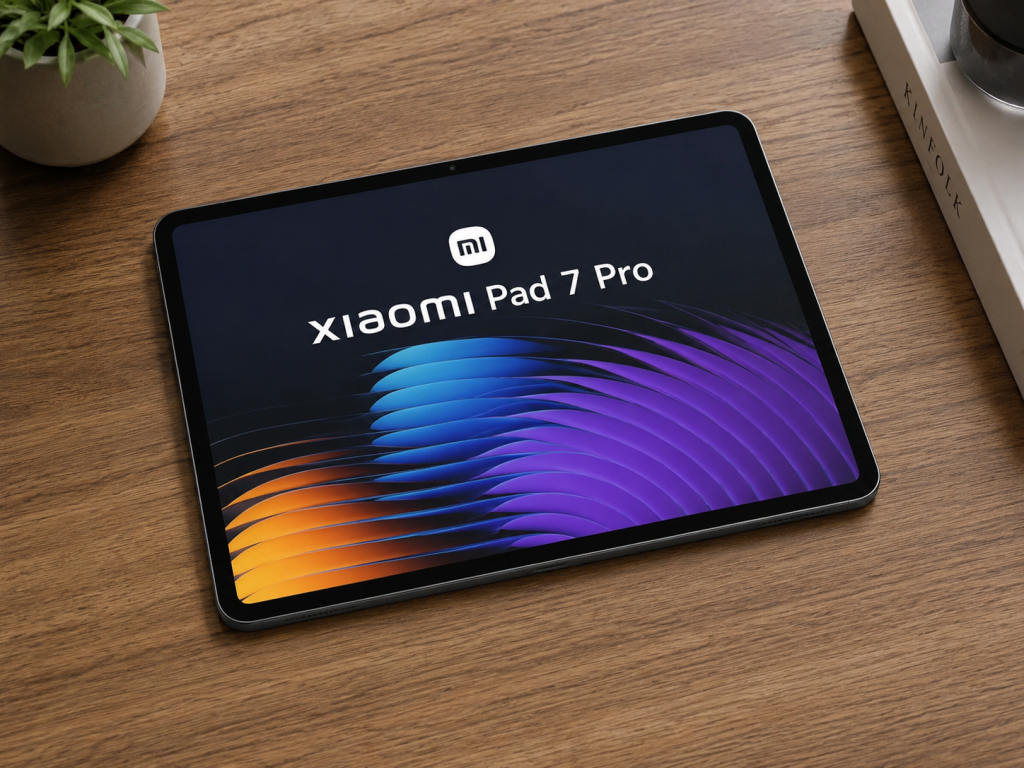
The Pad 7 Pro takes the opposite approach — a slim, unibody aluminum tablet designed to be held with two hands or propped on a stand. It comes in a matte-glass variant that mimics a paper-like feel, which is genuinely nice for note-taking with the stylus. It’s not rated for water resistance, which is a fair trade-off for a device that mostly lives on a desk or in a bag.
Display Comparison
This is where the two devices show their different priorities most clearly.
The 15 Ultra’s 6.73-inch LTPO AMOLED panel is one of the best smartphone screens available: WQHD+ resolution at 522 ppi, HDR10+ and Dolby Vision support, and a genuinely blistering 3,200-nit peak brightness that makes it easy to read outdoors in direct sun. Because it’s AMOLED, blacks are truly black and contrast is excellent.
The Pad 7 Pro’s 11.2-inch IPS LCD panel is larger and sharper in absolute terms (3.2K, 345 ppi) with a smoother 144Hz refresh rate that makes scrolling and stylus input feel very fluid. But LCD technology caps peak brightness at 800 nits and can’t match AMOLED’s contrast or true blacks. For video, reading, and split-screen productivity on a big canvas, the Pad 7 Pro still looks great — it’s just a different kind of “great.”
Performance and Processor
The Snapdragon 8 Elite inside the 15 Ultra is Qualcomm’s true flagship silicon for 2025 — built on a 3nm process with custom Oryon cores, it comfortably leads mobile benchmarks and handles anything from 8K video editing to the latest games at max settings without breaking a sweat.
The Pad 7 Pro’s Snapdragon 8s Gen 3 is a strong upper-mid-range chip, plenty fast for browsing, note-taking, streaming, and most games at high settings, but it’s roughly a tier below the 8 Elite in raw CPU and GPU throughput. If you plan to do heavy multitasking, video editing, or the newest AAA-style mobile games at ultra settings, the gap becomes noticeable.
RAM and Storage Options
The 15 Ultra offers 12GB or 16GB of RAM paired with 256GB, 512GB, or a full 1TB of storage — generous headroom for a device meant to shoot 8K video and juggle dozens of apps.
The Pad 7 Pro tops out at 12GB RAM and 512GB storage, with an 8GB/128GB entry configuration. Neither device supports microSD expansion, so it’s worth buying slightly more storage than you think you need on either one.
Camera Comparison
This category isn’t close, and it isn’t meant to be. The 15 Ultra is arguably the best camera phone on the market: a Leica-tuned quad system with a 50MP 1-inch main sensor, a 50MP 3x telephoto, a 200MP periscope telephoto with 4.3x optical zoom (up to 100x digital), and a 50MP ultrawide, all with OIS. It shoots 8K video and supports Dolby Vision HDR recording.
The Pad 7 Pro has a single competent 50MP rear camera intended mainly for document scanning and video calls, not creative photography — tablets simply aren’t built around camera hardware the way flagship phones are. If photography matters to you at all, this comparison ends here.
Battery Life and Charging
On paper the Pad 7 Pro’s 8,850mAh cell looks enormous next to the 15 Ultra’s 5,410mAh — but that capacity is powering a much larger, higher-resolution screen, so real-world screen-on time lands in a similar ballpark for both devices under typical use (browsing, video, note-taking).
The 15 Ultra charges faster in absolute terms with 90W wired HyperCharge (0-100% in well under an hour) and also supports 80W wireless charging, which the Pad 7 Pro lacks entirely. The Pad 7 Pro tops out at 67W wired.
Software and User Experience
Both run Xiaomi’s HyperOS on top of Android 15, but they’re tuned for very different form factors. HyperOS on the 15 Ultra is a standard phone experience with Xiaomi’s AI writing, speech recognition, and Google Gemini integration layered in.
HyperOS 2 on the Pad 7 Pro is genuinely tablet-optimized: a floating-window “Workstation mode” for desktop-style multitasking, HyperConnect for controlling your phone from the tablet, and cross-device features like using your phone’s camera as a tablet webcam. If productivity and multitasking on a big screen are your priority, the tablet’s software actually does more with its extra real estate than the phone does.
Connectivity and Features
The 15 Ultra has full 5G cellular connectivity (SA and NSA), so it works as a standalone communication device anywhere you have signal. The Pad 7 Pro is Wi-Fi 7 only in most markets — no SIM slot — so it depends on a hotspot or home Wi-Fi for internet access away from your router.
Both support Wi-Fi 7 and Bluetooth, and both have side-mounted fingerprint sensors. The 15 Ultra adds an ultrasonic in-display fingerprint reader instead.
Audio and Multimedia
The Pad 7 Pro has an edge here for pure media consumption: quad speakers tuned for Dolby Atmos with a 200% volume boost mode, ideal for watching video without headphones. The 15 Ultra has capable stereo speakers with Dolby Atmos too, but as a phone it simply has less physical space for speaker drivers, so the tablet sounds noticeably fuller and louder.
Gaming Performance
The Snapdragon 8 Elite in the 15 Ultra outperforms the Pad 7 Pro’s Snapdragon 8s Gen 3 in every major GPU and CPU benchmark, so demanding titles at max settings run smoother and with less thermal throttling on the phone. That said, the Pad 7 Pro’s larger 144Hz screen makes competitive and casual gaming feel more immersive, even if peak frame rates in the heaviest titles are a bit lower.
AI Features
Both devices lean on the same core toolkit: Xiaomi’s on-device AI Writing, AI Speech Recognition, and AI-powered image tools, plus Google Gemini integration (Circle to Search, Gemini Live, Gemini-generated images). The Pad 7 Pro’s larger screen makes AI-assisted note summarization and sketch-to-image tools noticeably more usable in daily work, while the 15 Ultra’s AI features lean more toward photography (AI-enhanced zoom, computational photography) and on-the-go writing/translation.
Benchmark Scores
Independent benchmark testing consistently puts the Snapdragon 8 Elite in the 15 Ultra roughly 25-35% ahead of the Snapdragon 8s Gen 3 in multi-core CPU tests and by an even wider margin in sustained GPU workloads, reflecting the generational and tier gap between the two chips. For everyday tasks — browsing, social media, video calls, office apps — both devices feel equally snappy; the gap only shows up under sustained, heavy workloads like gaming or video export.
Pros and Cons
Xiaomi 15 Ultra
Pros: Best-in-class Leica camera system, stunning ultra-bright AMOLED display, flagship-tier Snapdragon 8 Elite performance, IP68 water resistance, fast wired and wireless charging, full 5G connectivity.
Cons: Expensive, smaller screen for productivity work, no expandable storage, battery capacity modest for the display it drives, camera bump makes it top-heavy.
Xiaomi Pad 7 Pro
Pros: Large, sharp, high-refresh display great for productivity and media, huge battery, quad speakers with Dolby Atmos, desktop-style multitasking software, significantly cheaper than the phone.
Cons: No cellular connectivity, mid-tier chipset rather than a true flagship, single-camera setup unsuited to photography, LCD panel can’t match AMOLED contrast or brightness, stylus and keyboard sold separately.
Price Comparison
The Xiaomi 15 Ultra starts at roughly $910 for the 16GB/512GB global configuration, climbing higher for the 1TB variant — putting it firmly in flagship territory alongside the Galaxy S25 Ultra and iPhone 16 Pro Max.
The Xiaomi Pad 7 Pro starts around $400-550 depending on region and RAM/storage configuration, with the base 8GB/128GB model considerably cheaper and the 12GB/512GB top model closer to $550-600. Even at its highest configuration, it costs noticeably less than the phone.
Which One Should You Buy?
If you can only own one of these two devices, the honest answer is: they solve different problems, so the right pick depends entirely on what’s missing from your current setup. If you already have a decent phone and want a big screen for reading, note-taking, and streaming, get the Pad 7 Pro. If your phone is aging and you want the best possible camera and an all-around flagship experience in your pocket, get the 15 Ultra.
Who Should Buy Xiaomi 15 Ultra?
- Photography enthusiasts who want a phone camera that can genuinely replace a compact camera
- Anyone who wants the fastest, most future-proof Android chipset available
- People who need a single device that handles calls, messaging, and 5G data on the go
- Buyers who prioritize display brightness and outdoor visibility
- Anyone comfortable paying a flagship premium for best-in-class hardware
Who Should Buy Xiaomi Pad 7 Pro?
- Students and professionals who want a large screen for note-taking, reading, and document work
- Anyone who already owns a good phone and wants a secondary device for media and productivity
- Budget-conscious buyers who want flagship-adjacent specs without flagship pricing
- People who mostly use Wi-Fi at home, school, or the office and don’t need cellular data on a second device
- Media consumers who value a big, high-refresh screen and strong speakers for video and gaming
Frequently Asked Questions (FAQs)
Can the Xiaomi Pad 7 Pro make phone calls? No — it’s a Wi-Fi-only tablet with no SIM slot or cellular modem in most markets, so it can’t make calls or use mobile data independently.
Is the Xiaomi 15 Ultra worth it over the standard Xiaomi 15? If camera quality and display brightness are priorities, yes — the Ultra’s periscope zoom and 1-inch main sensor are a meaningful step up, though it costs significantly more.
Does the Xiaomi Pad 7 Pro support a stylus and keyboard? Yes, it supports Xiaomi’s magnetic stylus and keyboard cover accessories, both sold separately.
Which has better battery life, the 15 Ultra or the Pad 7 Pro? The Pad 7 Pro has a larger raw capacity (8,850mAh vs 5,410mAh), but because it drives a much bigger, higher-resolution display, real-world screen-on time between the two ends up fairly comparable.
Is the Xiaomi 15 Ultra water resistant? Yes, it carries an IP68 rating. The Pad 7 Pro has no official water resistance rating.
Final Verdict
There’s no universal winner here because these two devices aren’t really competing for the same job. The Xiaomi 15 Ultra is one of the best camera phones money can buy right now, with flagship performance and a genuinely gorgeous display, but it comes at a flagship price. The Xiaomi Pad 7 Pro delivers a fantastic big-screen productivity and media experience at a much friendlier price, as long as you’re fine with Wi-Fi-only connectivity and a single, unremarkable camera.
For most people, the practical move is to think of these as a pair rather than a fork in the road: the 15 Ultra as your daily-driver phone, and the Pad 7 Pro as the screen you reach for when you want to read, take notes, or binge-watch something on a couch. If budget forces a single choice, let your actual usage decide — camera and portability point to the 15 Ultra; screen size and productivity point to the Pad 7 Pro.