Two of the best flagship phones from 2024 — Google’s AI-first Pixel 9 Pro XL and Apple’s titanium-clad iPhone 16 Pro Max — represent very different philosophies of what a premium smartphone should be. Here’s a full breakdown to help you decide which one fits you better.
Quick Comparison Overview
| Google Pixel 9 Pro XL | Apple iPhone 16 Pro Max | |
|---|---|---|
| Release | August 2024 | September 2024 |
| Starting Price | $1,099 | $1,199 |
| Display | 6.8″ LTPO OLED | 6.9″ LTPO OLED |
| Chip | Google Tensor G4 | Apple A18 Pro |
| Base RAM | 16GB | 8GB |
| Battery | 5,060 mAh | 4,685 mAh |
| OS | Android 14 (upgradable) | iOS 18 (upgradable) |
| Build | Aluminum frame, Gorilla Glass Victus 2 | Titanium frame, Ceramic Shield |
Key Specifications
Google Pixel 9 Pro XL
- 6.8-inch LTPO OLED, 1344 x 2992 resolution
- Google Tensor G4 chipset with Titan M2 security co-processor
- 16GB RAM across all storage tiers
- 128GB / 256GB / 512GB / 1TB storage options
- 5,060 mAh battery with 45W wired charging
- Triple rear camera: 50MP wide, 48MP ultrawide, 48MP 5x telephoto
- Weight: 221g
Apple iPhone 16 Pro Max
- 6.9-inch LTPO Super Retina XDR OLED, 1320 x 2868 resolution
- Apple A18 Pro chipset (6-core CPU, 6-core GPU)
- 8GB RAM across all storage tiers
- 256GB / 512GB / 1TB storage options
- 4,685 mAh battery with wired fast charging (50% in 30 min)
- Triple rear camera: 48MP main, 48MP ultrawide, 12MP 5x telephoto
- Weight: 227g
Design and Build Quality
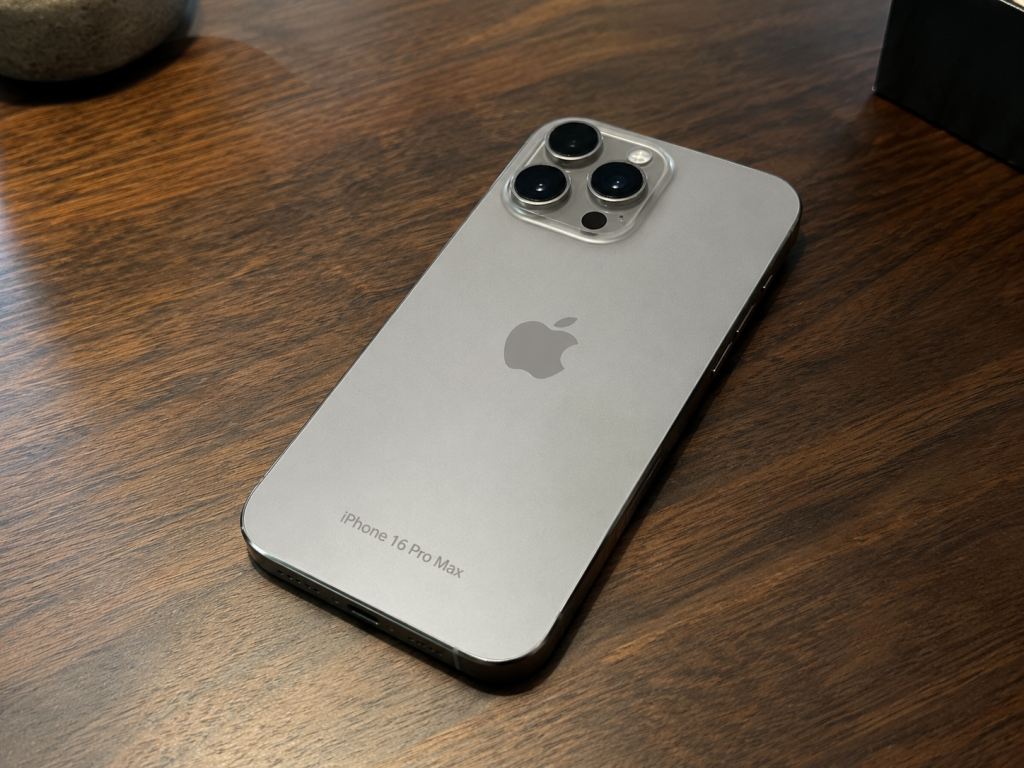
The iPhone 16 Pro Max uses a titanium frame paired with Ceramic Shield glass, giving it a premium, dense feel along with strong scratch resistance. Its thinner bezels are the slimmest Apple has shipped on any product to date.
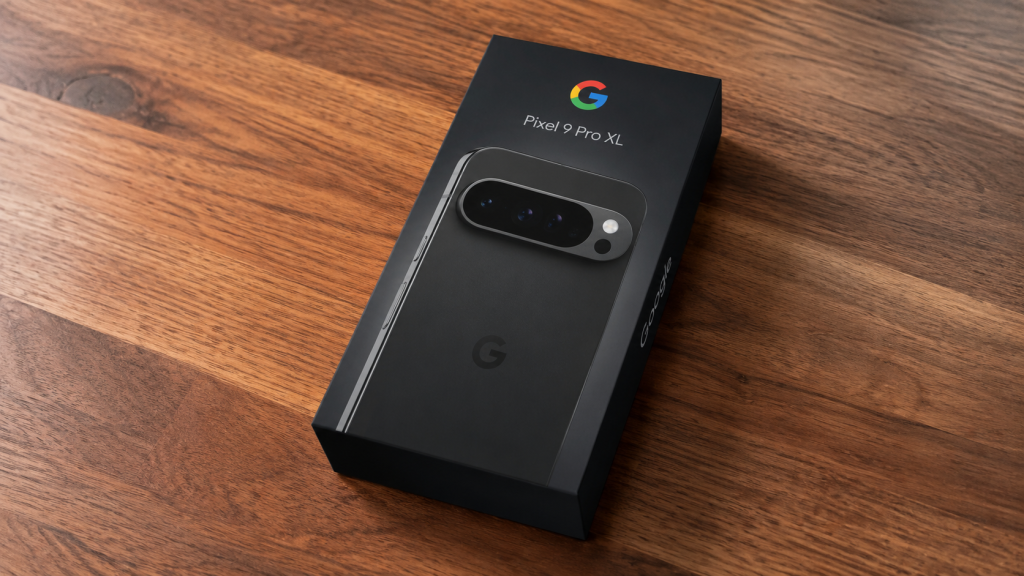
The Pixel 9 Pro XL takes a different design direction with a flat-edge aluminum frame, a redesigned “floating” camera bar, and Gorilla Glass Victus 2 protection front and back. It has a slightly more rounded, softer feel in the hand compared to the iPhone’s sharper, more angular titanium edges. Both phones are IP68 rated for dust and water resistance.
Display Comparison
Both phones use LTPO OLED panels with 120Hz adaptive refresh rates, so motion feels smooth in both cases. The iPhone edges out on peak brightness, reaching up to 2,000 nits HBM outdoors, while the Pixel’s panel is also very bright and benefits from Google’s tuning for outdoor visibility. The size difference (6.9″ vs 6.8″) is negligible in daily use — both are large, one-handed-use-is-a-stretch phones. Color accuracy and HDR support (Dolby Vision on iPhone, HDR content support on Pixel) are excellent on both.
Performance and Processor
This is where the two diverge most. The A18 Pro is built on a more advanced process and consistently outperforms the Tensor G4 in raw CPU and GPU benchmarks, making the iPhone the stronger choice for demanding games and pro video/photo editing apps. The Tensor G4 isn’t designed to chase benchmark leadership — Google has been explicit that it prioritizes on-device AI and machine learning tasks over raw throughput. In everyday use (browsing, social media, multitasking) both phones feel fast and responsive, but under sustained heavy load, the iPhone holds its performance edge better.
Camera Comparison
Google’s computational photography remains a strength: the Pixel 9 Pro XL’s 50MP main sensor combined with Google’s processing produces excellent detail, dynamic range, and skin tones, particularly in tricky lighting. Its 48MP 5x telephoto also supports Super Res Zoom video up to 20x.
The iPhone 16 Pro Max’s 48MP main sensor, upgraded ultrawide, and 5x telephoto (now standard across both Pro models) deliver more neutral, true-to-life color science and arguably better video quality, especially with 4K120 recording and ProRes support. Choosing between them often comes down to taste: Pixel photos tend to look more vivid and processed straight out of camera, while iPhone photos lean more natural.
Battery Life and Charging
The Pixel 9 Pro XL has a larger 5,060 mAh battery versus the iPhone’s 4,685 mAh, and in practice the two deliver fairly comparable all-day battery life thanks to efficiency differences between their chips and software. Apple’s charging speeds (50% in about 30 minutes with a compatible adapter) are competitive, and MagSafe wireless charging at up to 25W is a nice convenience. The Pixel supports up to 45W wired charging and Qi wireless charging, though speeds can vary depending on the charger.
Software and User Experience
The iPhone runs iOS 18 (upgradable to iOS 26 and beyond), known for its polish, long-term update support, and tight integration across Apple’s ecosystem (Mac, iPad, Apple Watch, AirPods). The Pixel runs Android 14 out of the box, upgradable through several major Android versions, with Google committing to seven years of OS and security updates — matching Apple’s typical support window for the first time in Pixel history.
Software philosophy differs: iOS favors a controlled, consistent experience, while Android on Pixel offers more customization (home screen widgets, default app choices, deeper system-level tweaks).
AI Features
This is arguably the Pixel’s signature selling point. The Tensor G4 is the first chip to run Gemini Nano with multimodality on-device, powering features like Pixel Screenshots (searchable screenshot organization), Pixel Studio (on-device image generation), Call Notes (on-device call transcription and summarization), and Gemini Live conversational AI.
Apple’s answer is Apple Intelligence, layered into iOS 18 with features like writing tools, notification summaries, Genmoji, and a more capable Siri (still rolling out in stages). Apple Intelligence is more conservative in scope so far but benefits from tight OS-level integration and strong privacy safeguards, including Private Cloud Compute for tasks beyond on-device capability.
If cutting-edge, fast-moving AI features are the priority, the Pixel currently offers more breadth. If a more measured, privacy-focused rollout matters more, the iPhone’s approach may appeal.
Storage and RAM Options
The Pixel 9 Pro XL starts with 16GB of RAM across every storage tier (128GB to 1TB), giving it an edge for multitasking and running on-device AI models. The iPhone 16 Pro Max ships with 8GB of RAM across its tiers (256GB to 1TB) — Apple’s tighter iOS memory management traditionally means it needs less RAM to feel just as fast, though the base storage starts at 256GB versus the Pixel’s 128GB.
Connectivity and Network Features
Both phones support 5G, Wi-Fi 7, Bluetooth 5.3, NFC, and satellite emergency messaging (Satellite SOS on Pixel, Emergency SOS via satellite on iPhone). The iPhone adds second-generation Ultra Wideband support and satellite-based Messages support. The Pixel’s Exynos modem enables satellite connectivity for emergency services, free for the first two years.
Audio and Multimedia
Neither phone includes a headphone jack, so both rely on Bluetooth or USB-C accessories for wired audio. Both support spatial audio playback and stereo speakers tuned for media consumption. The iPhone edges ahead for video capture with 4K120fps recording and ProRes support, appealing more to content creators; the Pixel counters with strong Super Res Zoom video and Night Sight video capabilities.
Security Features
The Pixel 9 Pro XL uses Google’s Titan M2 security chip alongside standard Android biometric protections (fingerprint under-display and face unlock). The iPhone 16 Pro Max relies on Face ID, backed by Apple’s Secure Enclave. Both offer strong on-device encryption and regular security patching, with Apple maintaining a slight edge in the consistency of update rollout timing.
Price and Value for Money
The Pixel 9 Pro XL starts at $1,099, undercutting the iPhone 16 Pro Max’s $1,199 starting price while offering double the base RAM and a lower entry storage tier (128GB vs 256GB). Value calculations depend heavily on ecosystem lock-in and feature priorities — the Pixel offers more for less on paper, but resale value and long-term software polish have historically favored the iPhone.
Pros and Cons
Google Pixel 9 Pro XL
Pros:
- More advanced, faster-rolling on-device AI features
- 16GB RAM standard across all models
- Excellent computational photography
- Slightly cheaper starting price
- Seven years of guaranteed updates
Cons:
- Tensor G4 trails in raw performance benchmarks
- Camera app processing can feel slower than iPhone’s
- Smaller third-party accessory ecosystem
Apple iPhone 16 Pro Max
Pros:
- Stronger raw CPU/GPU performance
- More natural camera color science, superior video specs
- Titanium build feels extremely premium
- Deep ecosystem integration with Mac, iPad, Watch
- Long track record of reliable, timely updates
Cons:
- Higher starting price
- Only 8GB RAM
- Apple Intelligence rollout has been more gradual
- No customization depth of Android
Who Should Buy the Google Pixel 9 Pro XL?
Choose the Pixel 9 Pro XL if you want the most advanced on-device AI experience available today, prefer Android’s flexibility, want more RAM for multitasking, and lean toward vibrant, ready-to-share photos straight out of the camera. It’s also the better pick if you’re budget-conscious relative to the flagship segment while still wanting top-tier specs.
Who Should Buy the Apple iPhone 16 Pro Max?
Choose the iPhone 16 Pro Max if you’re already invested in Apple’s ecosystem, want the strongest raw performance for gaming or professional editing, prioritize natural color science and best-in-class video recording, and value Apple’s long-standing consistency in software support and resale value.
Final Verdict
Both phones are excellent flagships that reflect their makers’ priorities. The Pixel 9 Pro XL is the AI trailblazer with more RAM and a lower price tag, ideal for people who want to be at the forefront of what on-device AI can do. The iPhone 16 Pro Max is the performance and ecosystem powerhouse, better suited to creators, gamers, and anyone already living inside Apple’s hardware lineup. Neither is a wrong choice — it comes down to which platform and set of priorities matter more to you.
Frequently Asked Questions (FAQ)
Is the Pixel 9 Pro XL or iPhone 16 Pro Max better for photography? Both are excellent. The Pixel tends toward vivid, computationally enhanced photos, while the iPhone favors natural, true-to-life color. Video recording generally favors the iPhone due to 4K120 and ProRes support.
Which phone has better battery life? Real-world battery life is comparable. The Pixel has a larger battery capacity, but the iPhone’s chip efficiency helps close the gap.
Which phone will get software updates for longer? Both now offer around seven years of major OS and security updates, putting them roughly on par for long-term support.
Is 8GB of RAM enough on the iPhone 16 Pro Max? Yes — iOS manages memory more efficiently than Android, so 8GB on iPhone tends to perform comparably to significantly more RAM on Android devices in everyday use.
Which phone is better for AI features? The Pixel 9 Pro XL currently offers a broader, faster-evolving set of on-device AI features through Gemini Nano. Apple Intelligence is still expanding its feature set on iOS.
Can I switch between Android and iOS easily if I choose one of these? Yes, both platforms offer official migration tools (Google’s “Switch to Android” and Apple’s “Move to iOS”) to transfer contacts, photos, messages, and more, though some app data and purchases may not transfer directly.