Introduction
Samsung and Google’s flagship phones represent two very different philosophies for what a “pro” Android device should be. The Galaxy S26 Ultra (released March 2026) leans into raw specs, a built-in S Pen, and privacy-first hardware innovation. The Pixel 10 Pro XL (released August 2025) leans into AI-driven software, computational photography, and a cleaner Android experience straight from Google. Here’s how they stack up.
Samsung Galaxy S26 Ultra vs Google Pixel 10 Pro XL: Quick Comparison
| Spec | Galaxy S26 Ultra | Pixel 10 Pro XL |
|---|---|---|
| Release date | March 11, 2026 | August 2025 |
| Display | 6.9″ QHD+ Dynamic AMOLED 2X, 120Hz, 2600 nits | 6.8″ LTPO OLED, 120Hz, 3300 nits |
| Chipset | Snapdragon 8 Elite Gen 5 for Galaxy (3nm) | Google Tensor G5 (TSMC 3nm) |
| RAM | 12GB | 16GB |
| Storage | 256GB / 512GB / 1TB | 256GB / 512GB / 1TB |
| Rear cameras | 200MP wide, 50MP ultrawide, 50MP 5x tele, 10MP 3x tele | 50MP wide, 48MP ultrawide, 48MP 5x tele |
| Front camera | 12MP | 42MP |
| Battery | 5000mAh, 65W wired / 15W wireless | 5200mAh, 39W wired / 25W wireless (Qi2.2) |
| OS | Android 16, One UI 8.5 | Android 16, Material 3 Expressive |
| Update support | 7 years | 7 years |
| Starting price | $1,299.99 (256GB) | $1,629 (256GB) |
| Standout feature | Built-in S Pen, Privacy Display | Gemini-powered Magic Cue, Camera Coach |
Design and Build Quality
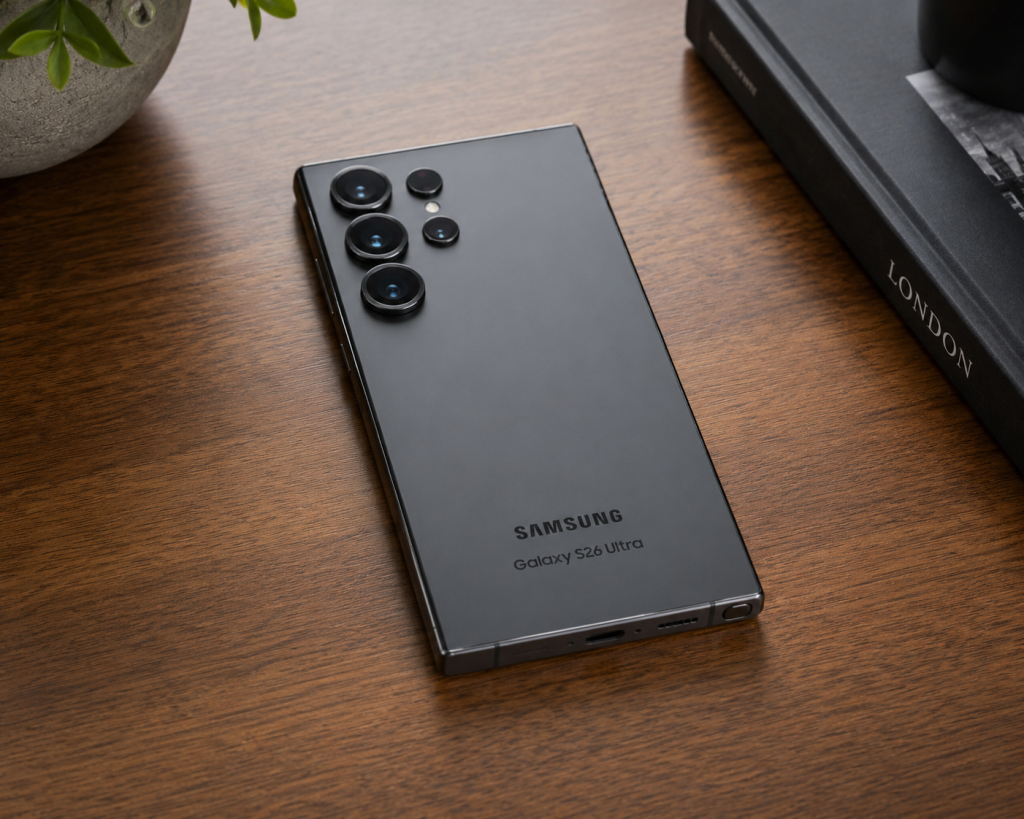
The S26 Ultra reverts to an aluminum frame (last seen on the S23) paired with a glass back, now with more rounded corners than its predecessor. It’s protected by Corning Gorilla Armor 2 up front — with an anti-reflective coating Samsung says cuts glare by up to 40% — and Gorilla Glass Victus 2 on the rear. It weighs 214g and measures 163.6 x 78.1 x 7.9mm.
The Pixel 10 Pro XL keeps the same basic design language as the Pixel 9 Pro XL: flat sides, rounded corners, and the signature camera bar, now also housing a thermometer sensor. It’s slightly heavier at 232g and measures 162.8 x 76.6 x 8.5mm. Both phones carry an IP68 rating for dust and water resistance.
Samsung’s case is the more distinctive one here thanks to the S Pen silo and the new Privacy Display hardware — the first smartphone technology that narrows the viewing angle on demand so the screen is unreadable from the side.
Display Comparison
Samsung wins on resolution: the S26 Ultra’s 6.9-inch panel runs at QHD+ (1440 x 3120, ~505 ppi), noticeably sharper on paper than the Pixel’s 6.8-inch panel at 2992 x 1344. Google, however, wins on peak brightness — its Super Actua display hits 3300 nits versus Samsung’s 2600 nits, which matters most for outdoor visibility in direct sun. Both use variable, LTPO-style refresh rates topping out at 120Hz for smooth scrolling and gaming.
Performance and Processor
The S26 Ultra runs Qualcomm’s Snapdragon 8 Elite Gen 5 for Galaxy, a 3nm chip with a customized NPU, GPU, and CPU tuned for Samsung’s Galaxy AI workloads — Samsung claims a 39% faster NPU generation-over-generation.
The Pixel 10 Pro XL runs Google’s own Tensor G5, the company’s first Tensor chip fabricated by TSMC (on the advanced N3E node) rather than Samsung Foundry. It’s built less for benchmark supremacy and more to run Gemini-based on-device AI efficiently.
In practice, the Snapdragon chip tends to lead in raw CPU/GPU benchmarks and sustained gaming performance, while the Tensor G5 is optimized specifically for Google’s AI feature set rather than peak throughput.
RAM and Storage Options
Both phones offer 256GB, 512GB, and 1TB storage tiers. The Pixel 10 Pro XL ships with 16GB of RAM across its lineup, while the Galaxy S26 Ultra’s base configuration comes with 12GB (higher-RAM variants exist in some markets). For heavy multitaskers, the Pixel has a slight edge on paper here.
Software and User Experience
The S26 Ultra ships with Android 16 wrapped in One UI 8.5, Samsung’s feature-dense skin that adds Samsung Wallet, Knox security, and deep S Pen integration. It’s promised 7 major OS upgrades and 7 years of security patches, running through 2033.
The Pixel 10 Pro XL also runs Android 16, but in its purest form with Google’s new Material 3 Expressive design language — more colorful theming, refreshed lock screen, and widget behavior. Google likewise commits to 7 years of updates. If you prefer Android as Google intended it, with faster day-one feature rollouts, the Pixel is the more direct path; if you want maximum customization and productivity tools layered on top, Samsung’s One UI goes further.
Camera Performance
This is where the two phones diverge most. The S26 Ultra’s quad-camera system is built around a 200MP primary sensor with a variable f/1.4–f/4.0 aperture, a 50MP ultrawide, a 50MP 5x periscope telephoto (using Samsung’s new “All Lens on Prism” mechanism instead of a traditional periscope), and a 10MP 3x telephoto. It’s a specs-forward setup that excels at zoom versatility and daylight detail.
The Pixel 10 Pro XL sticks with a 50MP wide, 48MP ultrawide (with macro focus), and 48MP 5x telephoto (now with tele-macro), but leans on Google’s computational photography stack — Pro Res Zoom up to 100x and a Gemini-powered Camera Coach that walks you through framing and lighting in real time. Google’s front camera is also considerably higher-res at 42MP versus Samsung’s 12MP.
Samsung generally has the edge in zoom hardware and peak-resolution detail; Google tends to edge out in color science, HDR processing, and computational consistency shot to shot.
Battery Life and Charging
The Pixel’s 5200mAh cell is slightly larger than Samsung’s 5000mAh, and Google claims up to 100 hours of runtime in battery saver mode. But Samsung wins decisively on charging speed: 65W wired charging (0–100% in about 45 minutes) versus the Pixel’s 39W. Wireless charging favors Google, though — the Pixel 10 Pro XL is the first Android phone to support Qi2.2 at up to 25W, compared to Samsung’s 15W Qi2 wireless charging.
Audio and Multimedia Experience
Both phones support stereo speakers tuned for media consumption and Bluetooth audio codecs suited to their respective ecosystems — Samsung pairs naturally with Galaxy Buds (including the new Buds 4 Pro), while the Pixel integrates tightly with Pixel Buds. Neither phone includes a headphone jack. For video playback, Samsung’s higher-resolution QHD+ panel gives a slight edge in fine detail, while the Pixel’s higher peak brightness helps HDR content look punchier.
Connectivity Features
Both phones support Wi-Fi 7 and Bluetooth 6/6.0-class radios with NFC. Samsung adds Ultra-Wideband (UWB) support for precision finding and SmartTag tracking, which the Pixel 10 Pro XL does not match. Google includes Google Cast support built in for casting to Chromecast and Google TV devices.
AI Features and Smart Capabilities
Samsung’s Galaxy AI suite on the S26 Ultra includes Photo Assist (object removal, reframing, restyling), Now Nudge (proactive suggestions like adding calendar events from a conversation), and Creative Studio for generating stickers, invitations, and images from text prompts — all wrapped with the new Privacy Display for keeping AI-surfaced personal content hidden from onlookers.
Google’s Pixel 10 Pro XL leans on Gemini directly: Magic Cue proactively surfaces relevant info (phone numbers, appointments) from your Gmail, Calendar, and Messages during conversations, and Camera Coach gives real-time photography guidance. Because Google builds Gemini, its AI features tend to feel slightly more integrated and immediate, while Samsung’s approach is broader in scope but occasionally requires a Samsung account and internet connection for the more advanced tools.
Gaming Performance
The Snapdragon 8 Elite Gen 5 inside the S26 Ultra is generally the stronger chip for sustained, demanding gaming sessions, thanks to Qualcomm’s mature GPU architecture and Samsung’s larger vapor chamber cooling in the Ultra chassis. The Tensor G5 is a capable everyday performer but has historically trailed flagship Snapdragon chips in raw gaming benchmarks and thermal throttling under extended load.
Productivity and Daily Usage
The built-in S Pen is the Galaxy S26 Ultra’s biggest productivity differentiator — handwriting notes, screen-off memos, and precise photo editing are all easier with a stylus that lives inside the phone. Multi-window support in One UI is also more mature than Android’s stock split-screen tools.
The Pixel 10 Pro XL counters with Magic Cue’s proactive assistance, which can save time by auto-surfacing information you’d otherwise have to dig for across apps. For anyone whose workflow revolves around Gmail, Google Calendar, and Google Docs, the Pixel’s tighter first-party integration is a real productivity advantage.
Accessories and Compatibility
Samsung’s ecosystem includes the Galaxy Buds 4 Pro, Galaxy Watch line, and S Pen-compatible cases, plus broad accessory support via Qi2 and UWB tags. Google’s Pixelsnap magnetic accessory system (based on Qi2) is newer but growing — Pixelsnap chargers, stands, ring stands, and cases are now available, and the Pixel 10 Pro XL is also compatible with many existing MagSafe accessories thanks to the shared Qi2 standard.
Price Comparison
Samsung is the more affordable flagship at every tier:
| Storage | Galaxy S26 Ultra | Pixel 10 Pro XL |
|---|---|---|
| 256GB | $1,299.99 | $1,629 |
| 512GB | — | $1,799 |
| 1TB | — | $2,099 |
Samsung’s roughly $300+ price advantage at the entry tier is significant, especially given the S26 Ultra also includes the S Pen at no extra cost.
Pros and Cons
Galaxy S26 Ultra
- ✅ Built-in S Pen at no added cost
- ✅ Sharper QHD+ display resolution
- ✅ Faster wired charging (65W)
- ✅ Industry-first Privacy Display
- ✅ Lower starting price
- ❌ Lower wireless charging speed
- ❌ Weaker front camera resolution
- ❌ One UI can feel bloated to some users
Pixel 10 Pro XL
- ✅ Brighter display (3300 nits)
- ✅ More RAM (16GB)
- ✅ Faster Qi2.2 wireless charging
- ✅ Cleaner, faster-updating Android experience
- ✅ Stronger Gemini AI integration
- ❌ Higher price across all storage tiers
- ❌ No stylus, no UWB
- ❌ Historically weaker sustained gaming performance
Which Device Is Better for Students?
The Galaxy S26 Ultra is the stronger pick for students, largely because of the built-in S Pen — handwritten note-taking, annotating PDFs, and quick diagrams are genuinely useful for coursework, and you’re not paying extra for a stylus. The lower starting price also matters on a student budget.
Which Device Is Better for Professionals?
This depends on your existing ecosystem. Professionals living in Google Workspace (Gmail, Calendar, Docs) will get more day-to-day value from the Pixel 10 Pro XL’s Magic Cue and tighter first-party integration. Professionals who need to annotate documents, take handwritten meeting notes, or want Samsung DeX-style desktop productivity will lean toward the S26 Ultra.
Who Should Buy Samsung Galaxy S26 Ultra?
- Anyone who wants a stylus built into their phone
- Photographers who want maximum zoom versatility (200MP sensor, 5x periscope-style tele)
- Privacy-conscious users who want the Privacy Display feature
- Buyers who want flagship specs at a lower price than Google’s Pro XL
Who Should Buy Google Pixel 10 Pro XL?
- Google ecosystem users who want the most integrated Gemini AI experience
- Anyone who prioritizes a brighter display and faster wireless charging
- Buyers who prefer close-to-stock Android with Google’s fastest feature rollout
- Selfie-focused users who want a significantly higher-resolution front camera
Frequently Asked Questions (FAQs)
Is the Galaxy S26 Ultra faster than the Pixel 10 Pro XL? In most raw benchmarks and sustained gaming, yes — the Snapdragon 8 Elite Gen 5 generally outperforms the Tensor G5. The Tensor G5 is optimized more for AI efficiency than peak throughput.
Does the Pixel 10 Pro XL have a stylus? No. Only the Galaxy S26 Ultra has a built-in S Pen among current flagships in this comparison.
Which phone has a better camera? It depends on your priorities. The S26 Ultra has higher-resolution sensors and more zoom range; the Pixel 10 Pro XL is known for more consistent computational photography and a much stronger front-facing camera.
Which phone charges faster? The S26 Ultra charges faster over a cable (65W vs. 39W). The Pixel 10 Pro XL charges faster wirelessly (25W Qi2.2 vs. 15W Qi2).
Is the Pixel Tablet 2 a real product I can buy? No — as of mid-2026, the Pixel Tablet 2 has not been released. Google reportedly paused development on it, and only unofficial leaked specs exist.
Final Verdict
Both phones are genuine 2026-era flagships, but they serve different priorities. The Galaxy S26 Ultra is the better all-around value: it’s cheaper, includes a built-in S Pen, charges faster over a cable, and offers more camera versatility. The Pixel 10 Pro XL is the better pick if you’re deep in Google’s ecosystem and want the most direct, fastest-updating Android experience with tightly integrated Gemini AI, a brighter screen, and faster wireless charging.