A quick note before we start: there is no “iPhone 17 Air” or “ASUS ROG Phone 10.” Apple’s ultra-thin phone officially shipped under the name iPhone Air (Apple dropped the “17”). And as for the ROG Phone 10 — ASUS confirmed in January 2026 that it has no new phones launching this year at all, gaming or otherwise, so that device doesn’t exist yet. This comparison instead pits the iPhone Air against ASUS’s actual current flagship, the ROG Phone 9 Pro, which remains the newest gaming phone ASUS sells.
Introduction
These two phones represent opposite philosophies. The iPhone Air is Apple’s thinnest iPhone ever, built around portability and design at the cost of a shrunken battery and a single rear camera. The ROG Phone 9 Pro is the opposite extreme: a thick, heavy, RGB-lit gaming machine built around raw performance, cooling, and battery capacity. Comparing them isn’t really “which is better” — it’s “which philosophy fits you.”
Quick Comparison Overview
| iPhone Air | ROG Phone 9 Pro | |
|---|---|---|
| Released | September 19, 2025 | November 19, 2024 |
| Chip | Apple A19 Pro | Snapdragon 8 Elite |
| Display | 6.5″ OLED, 120Hz, 3000 nits | 6.78″ AMOLED, 185Hz, 2500 nits |
| RAM | 12GB | 16GB / 24GB |
| Storage | 256GB / 512GB / 1TB | 512GB / 1TB |
| Rear cameras | Single 48MP | Triple: 50MP + 32MP telephoto + 13MP ultrawide |
| Battery | 3,149 mAh | 5,800 mAh |
| Charging | 40W wired (est.) | 65W wired, 15W wireless |
| Weight | 165g | ~223g |
| Starting price | $999 | $1,199 (16GB/512GB) |
Design and Build Quality
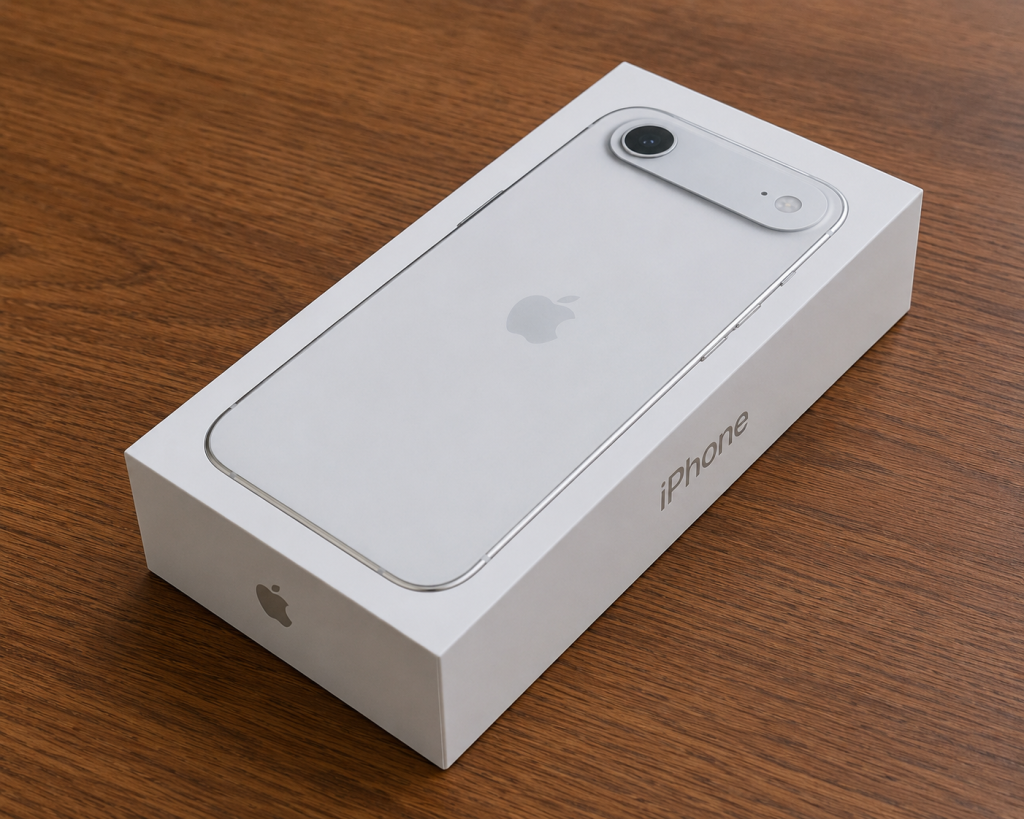
The iPhone Air is the headline act here: 5.6mm thick, 165g, with a titanium-aluminum frame and Ceramic Shield 2 on both front and back. It’s built to disappear in your hand and your pocket — no other flagship phone gets close to this thinness.
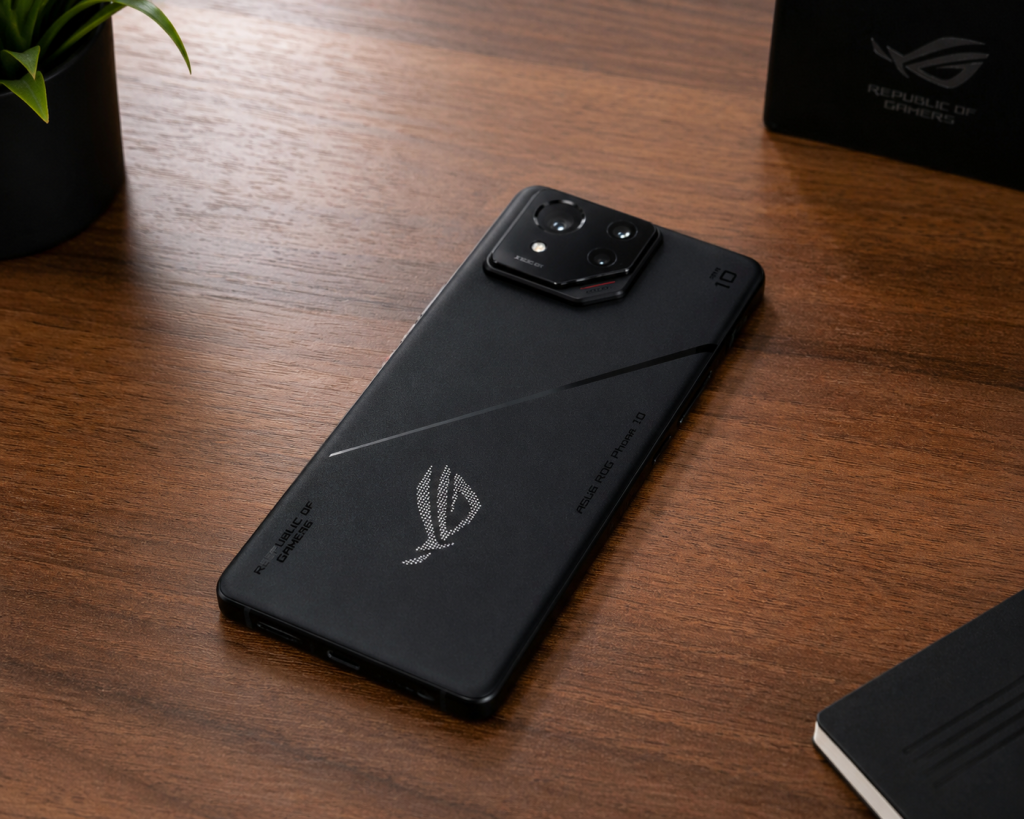
The ROG Phone 9 Pro doesn’t even try to compete on slimness. It’s a chunky slab with a glossy-and-matte finish, a programmable AniMe Vision LED matrix on the back (648 mini-LEDs), and a design that openly signals “gaming phone.” It’s IP68 rated for dust and water resistance, something the ultra-thin iPhone Air’s design compromises make harder to prioritize to the same degree.
If you want a phone that vanishes in your hand, the Air wins easily. If you want a phone that looks and feels like a piece of gaming hardware, the ROG Phone 9 Pro wins just as easily.
Display Comparison
- iPhone Air: 6.5-inch Super Retina XDR OLED, 2736×1260 (460 ppi), up to 120Hz ProMotion (adaptive down to 1Hz), 3,000 nits peak brightness, always-on display.
- ROG Phone 9 Pro: 6.78-inch Samsung E6 flexible AMOLED, FHD+ (2400×1080), up to 185Hz refresh rate, LTPO adaptive, 2,500 nits peak brightness, Gorilla Glass Victus 2.
The Air has the sharper panel (higher pixel density and brightness), but the ROG Phone 9 Pro’s 185Hz refresh rate is built specifically for competitive mobile games where every millisecond of responsiveness matters. For video and photo viewing, the iPhone’s display is arguably the nicer one to look at; for twitch-reflex gaming, the higher refresh rate has a real edge.
Performance and Processor
The iPhone Air runs Apple’s A19 Pro (6-core CPU, 5-core GPU, 16-core Neural Engine) — the same chip found in the iPhone 17 Pro line, just paired with 12GB of RAM instead of the Pro’s cooling setup.
The ROG Phone 9 Pro runs Qualcomm’s Snapdragon 8 Elite, paired with up to 24GB of RAM and a vapor-chamber cooling system specifically engineered to sustain peak clocks under load — something phones without dedicated cooling can’t do for long.
Apple’s chip tends to win single-core efficiency and sustained performance in short bursts; the Snapdragon 8 Elite in the ROG Phone can match or exceed it in raw GPU throughput, especially over long, sustained sessions where the ROG Phone’s cooling keeps clocks from throttling.
Gaming Performance
This is where the ROG Phone 9 Pro is built to dominate:
- 185Hz display vs the Air’s 120Hz
- AirTrigger ultrasonic shoulder buttons for console-style control
- Vapor chamber + optional AeroActive Cooler X Pro attachment for active cooling during long sessions
- Game Genie overlay for macros, performance monitoring, and live streaming tools
- X Mode performance profile that reallocates system resources purely to the foreground game
The iPhone Air can run the same high-end titles thanks to the A19 Pro’s capable GPU, and its thinness makes it comfortable to hold — but it has no dedicated gaming hardware, no extra buttons, and a smaller battery that will drain much faster under sustained 3D gaming load. For anyone who games for hours at a stretch, the ROG Phone 9 Pro is the clear pick.
Camera Comparison
This is the iPhone Air’s biggest hardware compromise. It ships with a single rear camera: a 48MP f/1.6 wide lens with sensor-shift OIS. There’s no ultrawide and no telephoto — you get one focal length, with Apple relying on computational cropping/zoom rather than a second lens. The front camera is an 18MP Center Stage sensor with a square design for flexible framing.
The ROG Phone 9 Pro has a proper triple-camera system: a 50MP Sony Lytia 700 main sensor with gimbal OIS, a 32MP f/2.4 telephoto with 3x optical zoom, and a 13MP 120° ultrawide. It also supports 8K video recording.
On paper, the ROG Phone 9 Pro has far more versatility — real optical zoom, a real ultrawide, and a larger core sensor. In practice, gaming phones have historically lagged behind Apple and Samsung in camera software (tuning, HDR processing, computational photography), and that reputation holds here — reviewers have generally rated the ROG 9 Pro’s camera as solid but not class-leading. The iPhone Air’s single lens is limiting for versatility, but Apple’s image processing is generally considered ahead of ASUS’s.
Battery Life
- iPhone Air: 3,149 mAh, rated for up to 27 hours of video playback. Apple’s efficiency and the A19 Pro’s power management help offset the smaller cell.
- ROG Phone 9 Pro: 5,800 mAh, ASUS rates it for roughly 26 hours of general use, or about 4.5 hours of continuous, graphics-maxed gaming.
For everyday mixed use, both phones can comfortably get through a full day. But the gap widens dramatically under gaming load — the ROG Phone 9 Pro’s nearly 2x larger battery is built specifically to survive marathon gaming sessions that would drain the Air in a couple of hours.
Charging Speed
The ROG Phone 9 Pro supports 65W wired charging (roughly 46 minutes to full) and up to 15W wireless charging via Qi. The iPhone Air supports Apple’s newer 40W-class wired charging (Apple advertises 50% charge in 20 minutes across the iPhone 17 lineup) along with Qi2 wireless charging via MagSafe. The ROG Phone charges faster in raw wattage; Apple’s MagSafe ecosystem is more convenient for wireless charging and accessories.
Software and User Experience
The iPhone Air runs iOS 26 with Apple’s usual multi-year update commitment. The ROG Phone 9 Pro runs Android 15 with ASUS’s ROG UI layered on top, plus gaming-specific tools like Game Genie and X Sense. ASUS has guaranteed software and security updates through Q2 2028. iOS remains the more polished, consistent daily-use experience; ROG UI trades some of that polish for deep gaming customization most other phones don’t offer.
AI Features
Apple Intelligence ships across the iPhone 17 lineup, including the Air: Clean Up photo editing, Visual Intelligence, offline live translation, AI call screening, and 3D photo wallpapers. ASUS’s AI features on the ROG Phone 9 Pro are gaming-focused rather than general-purpose: X Sense (auto-detects in-game events and can auto-upgrade character skills in supported titles) and X Capture (automatically clips highlight moments). They’re solving different problems — Apple’s AI is aimed at daily productivity and photography, ASUS’s is aimed squarely at gameplay.
Audio and Speakers
The ROG Phone 9 Pro has a strong reputation here: stereo speakers with DTS:X support, a 5-magnet speaker design, Hi-Res Audio support up to 384kHz/32-bit, and — notably — a 3.5mm headphone jack, which the iPhone Air does not have. Apple’s iPhone lineup dropped the headphone jack years ago, and the Air is no exception. If wired headphones or a dedicated audio jack matter to you, the ROG Phone 9 Pro is the only one of the two that has it.
Connectivity and Network Features
The iPhone Air uses Apple’s own N1 wireless chip (Wi-Fi 7, Bluetooth 6, Thread) and its first-generation C1X modem — Apple’s own cellular modem, replacing Qualcomm. Notably, the iPhone Air is eSIM-only worldwide, with no physical SIM tray at all. The ROG Phone 9 Pro uses Wi-Fi 6, Bluetooth 5.4, dual physical SIM support, and NFC — a more conventional setup that keeps physical SIM flexibility.
Storage and RAM Options
- iPhone Air: 12GB RAM (fixed), 256GB / 512GB / 1TB storage
- ROG Phone 9 Pro: 16GB or 24GB RAM, 512GB or 1TB storage
The ROG Phone 9 Pro offers meaningfully more RAM, which helps with keeping multiple demanding games and background apps (like streaming/recording tools) running simultaneously.
Security Features
Both phones offer biometric security: the iPhone Air uses Face ID, while the ROG Phone 9 Pro uses an in-display fingerprint sensor. Apple’s A19 Pro also introduces Memory Integrity Enforcement (MIE), a hardware-and-OS memory-safety system Apple says is aimed at making spyware exploit chains significantly more expensive to build. ASUS doesn’t market an equivalent system-level security feature, relying instead on standard Android security patches.
Durability and Water Resistance
The ROG Phone 9 Pro carries an IP68 rating for dust and water resistance. Apple has not published a formal IP rating specifically emphasized for the iPhone Air in the way it typically does for its Pro models, though the Air does use Ceramic Shield 2 on both front and back for scratch and crack resistance. If official water/dust resistance is a priority, verify current IP ratings on Apple’s spec page before buying, as this can change with software/hardware revisions.
Benchmark Performance
Independent benchmark testing (e.g. AnTuTu, Geekbench) generally shows the ROG Phone 9 Pro’s Snapdragon 8 Elite delivering higher raw GPU throughput and multi-core scores, particularly in sustained tests where its cooling system prevents throttling. Apple’s A19 Pro tends to lead in single-core performance and power efficiency. Exact scores vary by test conditions and firmware version, so treat any specific numbers you see online as a snapshot rather than a permanent ranking.
Pros and Cons
iPhone Air
- ✅ Remarkably thin and light
- ✅ Excellent display quality and brightness
- ✅ Strong photo processing despite single lens
- ✅ Apple Intelligence features, long software support
- ❌ Single rear camera, no telephoto or ultrawide
- ❌ Smaller battery, weaker under sustained heavy use
- ❌ No headphone jack, no physical SIM
ROG Phone 9 Pro
- ✅ Best-in-class sustained gaming performance
- ✅ Versatile triple-camera system with real optical zoom
- ✅ Massive battery and fast charging
- ✅ Headphone jack, dual SIM, expandable cooling accessories
- ❌ Thick, heavy, unmistakably a “gaming phone” design
- ❌ Camera processing/software lags behind Apple
- ❌ No confirmed 2026 successor — it’s now ASUS’s legacy flagship
Which Phone is Better for Gaming?
The ROG Phone 9 Pro, without much debate. The 185Hz display, AirTrigger buttons, active cooling, and nearly double the battery capacity are all purpose-built for long, demanding gaming sessions in a way the iPhone Air simply isn’t designed for.
Which Phone is Better for Photography?
This depends on what you value. For versatility (zoom, ultrawide, manual control), the ROG Phone 9 Pro’s triple-camera system objectively does more. For consistent, well-processed shots straight out of the camera app, the iPhone Air’s single lens and Apple’s computational photography pipeline are generally considered more reliable for casual shooting.
Which Phone is Better for Daily Use?
The iPhone Air. It’s lighter, easier to carry, has a longer software support runway, integrates with Apple’s ecosystem (AirDrop, MagSafe, iMessage, Apple Watch, etc.), and its battery life is adequate for normal daily use even though it’s smaller in raw capacity. The ROG Phone 9 Pro can function as a daily driver too, but its size and gamer-first design make it a less natural fit for people who aren’t specifically gaming on it.
Price Comparison
- iPhone Air: starts at $999 (256GB)
- ROG Phone 9 Pro: starts at $1,199 (16GB/512GB); the 24GB/1TB Pro Edition runs $1,499
The ROG Phone 9 Pro costs more at every comparable tier, though it also includes more RAM/storage headroom and gaming-specific accessories in some bundles.
Value for Money
For a general smartphone buyer, the iPhone Air’s $999 starting price buys a more broadly useful device day-to-day. For a dedicated mobile gamer, the ROG Phone 9 Pro’s higher price is easier to justify given the hardware built specifically for that use case — and its resale/collector value has reportedly held up well precisely because ASUS has no 2026 successor on the market.
Who Should Buy the Apple iPhone Air?
Someone who wants the thinnest, lightest flagship phone available, prioritizes a polished all-around experience, is invested in Apple’s ecosystem, and doesn’t need a versatile camera system or marathon gaming battery life.
Who Should Buy the ASUS ROG Phone 9 Pro?
Someone who games for hours at a time on mobile, wants a versatile triple-camera setup, values a headphone jack and dual SIM, and doesn’t mind a thicker, heavier, more overtly “gamer” design in exchange for hardware built to match that use case.
Frequently Asked Questions (FAQs)
Is there an iPhone 17 Air? No — Apple’s phone is officially named the iPhone Air, not “iPhone 17 Air.” It was released alongside the iPhone 17, 17 Pro, and 17 Pro Max in September 2025.
Is there an ASUS ROG Phone 10? Not yet. ASUS confirmed in January 2026 that it has no new phone launches — ROG Phone or Zenfone — planned for 2026. The ROG Phone 9 Pro remains ASUS’s current flagship, with existing devices continuing to receive software and warranty support.
Which phone has a better camera? The ROG Phone 9 Pro has more camera hardware (three lenses vs. one), but the iPhone Air is generally considered to have more consistent image processing for everyday shooting.
Which phone has better battery life for gaming? The ROG Phone 9 Pro, by a wide margin — its 5,800 mAh battery is nearly double the iPhone Air’s 3,149 mAh, and it’s paired with active cooling to sustain performance longer.
Does the iPhone Air have a headphone jack? No. Neither does it have a physical SIM slot — it’s eSIM-only worldwide.
Final Verdict
These two phones aren’t really direct rivals — they’re built for different people. The iPhone Air is the better all-around daily phone: thinner, lighter, better integrated into a broader ecosystem, with a display and camera processing that hold up well for everyday use. The ROG Phone 9 Pro is the better tool for a specific job: sustained, high-performance mobile gaming, backed by a bigger battery, faster charging, a more versatile camera, and hardware features (headphone jack, extra buttons, active cooling) that only make sense on a phone built gamers-first.