Introduction
These two phones almost don’t belong in the same conversation. The Samsung Galaxy Z Fold7 is a 2025 flagship foldable with an 8-inch tablet-sized inner screen, a 200MP camera, and a price tag to match. The Apple iPhone 13 mini is a compact 2021 handset built for people who wanted a small, one-handed phone before Apple discontinued the “mini” line altogether.
So why compare them? Because plenty of people are choosing between “go big and futuristic” or “stay small and simple” — and this comparison lays out exactly what you gain and give up with each path.
Samsung Galaxy Z Fold7 vs Apple iPhone 13 mini: Quick Comparison
| Spec | Galaxy Z Fold7 | iPhone 13 mini |
|---|---|---|
| Release date | July 2025 | September 2021 |
| Display | 8.0″ foldable AMOLED (main) + 6.5″ AMOLED (cover) | 5.4″ Super Retina XDR OLED |
| Refresh rate | Up to 120Hz | 60Hz |
| Chipset | Snapdragon 8 Elite for Galaxy | Apple A15 Bionic |
| RAM | 12GB / 16GB | 4GB |
| Storage | 256GB / 512GB / 1TB | 128GB / 256GB / 512GB |
| Rear cameras | 200MP + 12MP UW + 10MP telephoto (3x) | 12MP wide + 12MP ultra-wide |
| Battery | 4,400 mAh | 2,406 mAh |
| Charging | 25W wired, wireless, reverse wireless | 20W wired (sold separately), 15W MagSafe |
| Weight | 215g | 140g |
| Thickness (folded/unfolded) | 8.9mm / 4.2mm | 7.65mm |
| OS at launch | Android 16, One UI 8 | iOS 15 |
| Water resistance | IP48 | IP68 |
| Starting price | ~$1,999 | Discontinued (~$400–500 used/refurbished) |
Design and Build Quality
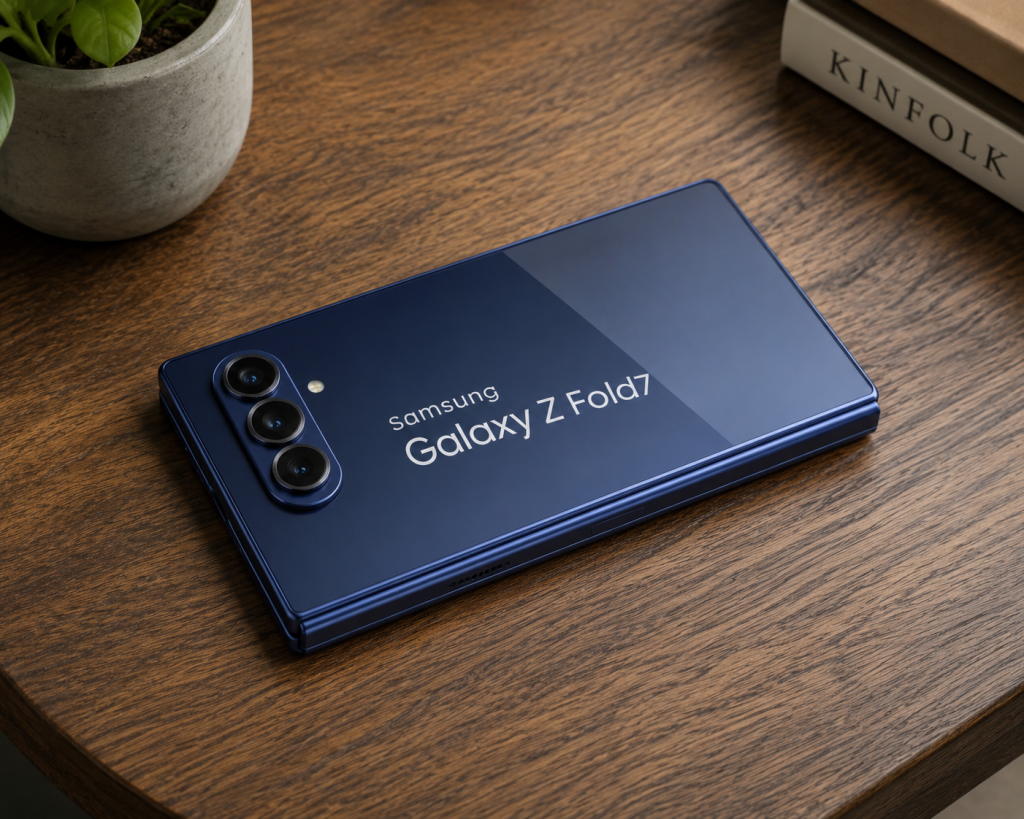
The Z Fold7 is Samsung’s thinnest and lightest fold yet, thanks to a new Armor Aluminum frame and Corning Gorilla Glass Ceramic 2 on the cover screen. <cite index=”3-1″>Folded, it measures 8.9 mm thick, and unfolded it is just 4.2mm thick, a major slimdown from previous generations.</cite> <cite index=”3-2″>It’s also the lightest Galaxy Z Fold so far, weighing 215g.</cite> The hinge lets the phone stand in “Flex Mode” for hands-free video calls or media viewing.
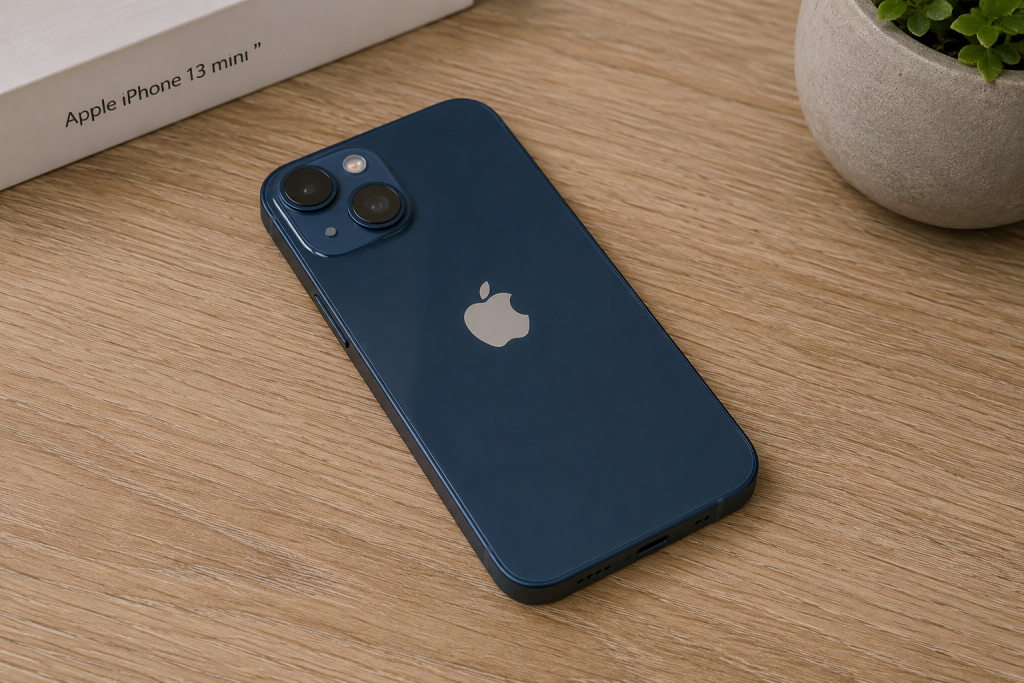
The iPhone 13 mini takes the opposite approach entirely: a flat, one-piece slab with a Ceramic Shield front, glass back, and aluminum sides — small enough to disappear into a jacket pocket and comfortably usable one-handed. It’s the last truly compact flagship-class iPhone Apple has made, and it still has an edge on ruggedness with a full IP68 rating versus the Fold7’s IP48 (splash and dust resistant, but not built for full submersion).
If you want a phone that unfolds into a mini tablet, the Fold7 wins outright. If you want something you forget is even in your pocket, the 13 mini remains hard to beat, even years later.
Display Comparison
This is where the two phones diverge most dramatically.
The Z Fold7 has two screens: <cite index=”3-1,6-1″>a 6.5-inch cover display and an 8.0-inch main foldable display, both Dynamic AMOLED 2X panels</cite>, with the main screen reaching <cite index=”9-1″>up to 2,600 nits of brightness under specific conditions, such as when using Vision Booster in direct sunlight</cite>, and refreshing at up to 120Hz. That big inner canvas is genuinely useful for split-screen multitasking, reading, and editing photos or documents.
The iPhone 13 mini’s 5.4-inch Super Retina XDR OLED is sharp (476ppi) and color-accurate, with excellent HDR support and Apple’s usual color calibration — but it’s capped at 60Hz and is a single, compact panel with no folding trick up its sleeve.
For media consumption, multitasking, or app-heavy productivity, the Fold7’s real estate is a different league. For readability in bright sun and simple one-handed scrolling, the mini still holds its own, even if it looks small by 2026 standards.
Performance and Hardware
<cite index=”9-1″>The Galaxy Z Fold7 is powered by the Snapdragon 8 Elite chipset, manufactured using a 3 nm process, with an octa-core CPU including two high-performance cores clocked at 4.47 GHz and six efficiency cores clocked at 3.53 GHz.</cite> <cite index=”9-1″>It comes with 12 GB of RAM on standard models, while the 1TB variant includes 16 GB of RAM.</cite> That’s more than enough headroom for split-screen multitasking, gaming, and on-device AI features.
The iPhone 13 mini’s A15 Bionic was a genuine powerhouse for 2021 and still handles everyday tasks, most current apps, and casual gaming smoothly today. But paired with just 4GB of RAM, it shows its age with heavier multitasking, and it’s now several silicon generations behind the Fold7’s chip in raw throughput and AI acceleration.
In short: the Fold7 is a current-generation flagship-tier performer; the 13 mini is a well-aged but increasingly dated performer.
Software and User Experience
The Fold7 ships on <cite index=”2-1″>One UI 8, which integrates intelligent, multimodal AI agents specifically optimized for the foldable experience</cite>, along with Google’s Gemini Live baked in for real-time, conversational AI assistance. Samsung has also built out app continuity features so that apps resize intelligently as you fold and unfold the device.
The iPhone 13 mini launched on iOS 15 and can run current iOS versions (subject to Apple’s ongoing support window), giving it Apple’s usual polish, App Store consistency, and iMessage/FaceTime ecosystem — but without the multi-window, foldable-specific software tricks that define the Fold7 experience. It also won’t get Apple Intelligence features that require newer hardware.
Camera Comparison
The Fold7’s camera system is a big generational leap: <cite index=”9-1″>a triple rear camera system comprising a 200 MP wide-angle sensor, a 12 MP ultra-wide lens, and a 10 MP telephoto lens with 3x optical zoom</cite>, plus <cite index=”9-1″>a 10 MP cover camera and a 10 MP hole-punch camera on the main display for selfies and video calls</cite>. Samsung’s ProVisual Engine adds always-on HDR processing and AI-assisted scene detection, and the camera app <cite index=”9-1″>works with Gemini Live to process information from the live feed, enabling tasks like syncing event info from posters to the calendar</cite>.
The iPhone 13 mini has a simpler dual 12MP setup (wide + ultra-wide) — no telephoto, no 200MP sensor — but Apple’s computational photography (Smart HDR 4, Photographic Styles, Cinematic mode for video) still produces reliably great everyday photos, especially in good lighting.
If you shoot a lot of zoomed or ultra-detailed photos, or want a versatile telephoto lens, the Fold7 is far ahead. For quick, consistent point-and-shoot results, the 13 mini still performs admirably.
Battery Life and Charging
<cite index=”9-1″>The Galaxy Z Fold7 is powered by a dual 4,400 mAh battery</cite>, which comfortably covers a full day of mixed use even with that large inner display running. It supports 25W wired fast charging, wireless charging, and reverse wireless charging for topping up earbuds or watches.
The iPhone 13 mini has a much smaller ~2,406 mAh battery, and its compact size means shorter battery life is the main trade-off for its pocketable form factor — it typically needs a top-up by evening with moderate-to-heavy use. Charging tops out at 20W wired (with a separately-sold adapter) and 15W MagSafe wireless.
Storage and Memory Options
<cite index=”9-1″>Storage options for the Z Fold7 include 256 GB, 512 GB, and 1 TB, using fast UFS 4.0 technology, paired with 12GB or 16GB of RAM</cite> depending on the configuration. There’s no microSD expansion, but the top-tier 1TB option covers even heavy users who shoot lots of video.
The iPhone 13 mini offers 128GB, 256GB, and 512GB storage tiers, with a fixed 4GB of RAM across all models. No expandable storage was ever offered on iPhones.
Connectivity and Extra Features
The Z Fold7 includes 5G, Wi-Fi 7, Bluetooth 5.x, UWB (Ultra-Wideband) for precise device finding, S Pen compatibility (sold separately, no in-body silo), and NFC. Its foldable design also natively supports Flex Mode for hands-free use.
The iPhone 13 mini includes 5G, Wi-Fi 6, Bluetooth 5.0, U1 Ultra-Wideband chip, NFC for Apple Pay, and MagSafe accessory support — a signature Apple ecosystem feature that lets magnetic wallets, mounts, and chargers snap on securely.
Audio and Multimedia Experience
Samsung’s Fold7 benefits from its large inner screen for video and gaming, paired with stereo speakers tuned by AKG and Dolby Atmos support, making it a strong portable media and gaming device.
The iPhone 13 mini also has stereo speakers with Dolby Atmos support and Apple’s typically well-tuned audio profile, but its smaller screen makes it less ideal for extended video watching or gaming sessions compared to the Fold7’s tablet-like canvas.
Security Features
The Fold7 uses an under-display or side-mounted ultrasonic fingerprint sensor along with face recognition, standard for Samsung’s flagship Android security stack, plus Samsung Knox for hardware-level data protection.
The iPhone 13 mini relies on Face ID, Apple’s TrueDepth facial recognition system, which remains fast and reliable, backed by the Secure Enclave for on-device data protection.
Pros and Cons
Samsung Galaxy Z Fold7
Pros:
- Massive, high-refresh-rate foldable display for multitasking and media
- Cutting-edge Snapdragon 8 Elite performance
- Versatile triple camera system with true telephoto zoom
- Large battery with fast and wireless charging
- Latest Android AI features (Gemini Live, Galaxy AI)
Cons:
- Very expensive
- Bulkier and heavier than a normal phone, even with the slimmed-down design
- Lower IP rating than most flagship slabs
- Crease on the inner display is still present, however minimized
Apple iPhone 13 mini
Pros:
- Small, light, genuinely one-handed design
- Still-capable A15 Bionic chip for everyday tasks
- Full IP68 water resistance
- Reliable Face ID and Apple ecosystem integration
- Much cheaper (now sold refurbished/used only)
Cons:
- Discontinued — no longer sold new by Apple
- Smaller battery, weaker all-day endurance
- 60Hz display, no telephoto camera
- Aging chipset and only 4GB RAM
- Won’t support the latest Apple Intelligence features
Who Should Buy Samsung Galaxy Z Fold7?
The Fold7 makes sense for people who want their phone to double as a small tablet — professionals who multitask across apps, content creators who want a big canvas for editing, or anyone who’s willing to pay a premium for the latest folding technology and camera hardware. It’s a “want the best, willing to pay for it and carry a bigger device” purchase.
Who Should Buy Apple iPhone 13 mini?
The 13 mini is for people who specifically want a small phone and are buying used or refurbished on a budget — students, minimalists, or anyone who tried today’s oversized flagships and missed one-handed use. It’s not a phone you’d buy new for cutting-edge performance; it’s a phone you buy because Apple hasn’t made anything this compact since.
Price and Value for Money
<cite index=”4-1″>The Galaxy Z Fold7 has been seen at prices around $1,676 for a 256GB configuration</cite> at retail, with official Samsung pricing typically starting near $1,999 and climbing with storage. It’s a premium investment justified by genuinely flagship-tier hardware across the board.
The iPhone 13 mini, since being discontinued, is only available new-old-stock, refurbished, or secondhand — typically in the $350–$550 range depending on condition and storage. For that price, it remains a strong value if compact size is the priority, though buyers should factor in that Apple’s software support window will eventually end sooner than for newer models.
Frequently Asked Questions (FAQs)
Is the iPhone 13 mini still worth buying in 2026? Only if a genuinely compact phone is your top priority and you’re comfortable buying used or refurbished, since it’s no longer sold new and is several hardware generations behind current flagships.
Can the Galaxy Z Fold7 replace a tablet? For light productivity, reading, and media, yes — its 8-inch display covers a lot of the same use cases as a small tablet, though it’s still a phone-first device.
Does the Z Fold7 support S Pen input? Yes, it supports S Pen input, though (unlike the older Note-style phones) it doesn’t have a built-in silo to store the pen inside the body.
Which phone has better battery life? The Galaxy Z Fold7’s much larger 4,400 mAh battery comfortably outlasts the iPhone 13 mini’s roughly 2,400 mAh battery in most real-world use.
Is the Z Fold7 waterproof? It carries an IP48 rating, which covers dust and splash resistance but is not intended for submersion, unlike the iPhone 13 mini’s full IP68 rating.
Final Verdict
These two phones serve almost opposite philosophies. The Galaxy Z Fold7 is for people chasing the biggest screen, the best camera hardware, and the latest AI-powered software in a genuinely premium (and genuinely expensive) package. The iPhone 13 mini is for people who decided, years ago, that smaller is better — and are happy to buy it secondhand today rather than adapt to the giant-screen era every other flagship has embraced.